• العربية
  • فارسی
Brand
  • Iran Insight
  • Politics
  • Economy
  • Analysis
  • Special Report
  • Opinion
  • Podcast
  • Live TV
  • Iran Insight
  • Politics
  • Economy
  • Analysis
  • Special Report
  • Opinion
  • Podcast
  • Live TV
  • Theme
  • Language
    • العربية
    • فارسی
  • Iran Insight
  • Politics
  • Economy
  • Analysis
  • Special Report
  • Opinion
  • Podcast
  • Live TV
All rights reserved for Volant Media UK Limited
volant media logo

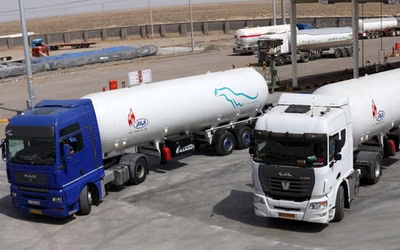
Iranian tanker hit by missile at Kharg Island - SNN

Sep 5, 2026, 07:37 GMT+1

A small Iranian oil tanker was hit in a missile attack at Kharg Island, Iran's Tehran-based Student News Network (SNN) reported on Saturday, citing local sources.

SNN said there were no casualties in the incident.

Fars news agency separately reported that several explosions were heard from the Persian Gulf area around Kharg Island.

Most Viewed

Xi snub reignites Iran’s doubts about China
1
INSIGHT

Xi snub reignites Iran’s doubts about China

2
INSIGHT

Five years ago, Iran’s planners put today’s crisis on paper

3
INSIGHT

US strikes deepen Tehran debate over compromise or confrontation

4
ANALYSIS

If Britain backs US plan, Iran's London bank shuts down on October 22

5
ANALYSIS

Trump’s call for an Iranian uprising runs into a trust problem

Banner
Banner

Spotlight

  • If Britain backs US plan, Iran's London bank shuts down on October 22
    ANALYSIS

    If Britain backs US plan, Iran's London bank shuts down on October 22

  • US strikes deepen Tehran debate over compromise or confrontation
    INSIGHT

    US strikes deepen Tehran debate over compromise or confrontation

  • Xi snub reignites Iran’s doubts about China
    INSIGHT

    Xi snub reignites Iran’s doubts about China

  • Trump’s call for an Iranian uprising runs into a trust problem
    ANALYSIS

    Trump’s call for an Iranian uprising runs into a trust problem

  • Five years ago, Iran’s planners put today’s crisis on paper
    INSIGHT

    Five years ago, Iran’s planners put today’s crisis on paper

  • Women footballers came home under pressure. Now Iran wants them on camera
    ANALYSIS

    Women footballers came home under pressure. Now Iran wants them on camera

Banner
•
•
•

More Stories

In Hormuz, Iran only needs to keep ships guessing

Sep 5, 2026, 07:19 GMT+1
•
Negar Mojtahedi
100%
File Photo: Iran’s Fajr-5 multiple-launch rocket system fires a rocket during a military exercise.

Even the possibility that Iran could put mines into one of the world’s most important shipping routes can deter commercial traffic and force the US military to maintain constant surveillance, former CENTCOM commander Joseph Votel told Iran International.

“The mere threat out there, just the threat of these, is enough to deter traffic, certainly commercial traffic,” Votel told Eye for Iran podcast. .

“It has a huge deterrent effect and it puts the burden on us to keep really, really close watch on this area.”

That creates a paradox in the latest battle over Hormuz: Iran may be turning to rocket-launched mines because more powerful options have been degraded, yet Washington must still behave as though the threat could get through.

The latest US-Iran flare-up began after the US military said it detected Iranian forces on Larak Island preparing to launch rockets carrying sea mines into the Strait. US forces struck the launchers before they could fire.

Iran has traditionally been able to deploy naval mines using small boats, submarines or aircraft. Firing them from rockets would allow Iranian forces to place mines at a distance without exposing boats and crews to US forces watching the waterway.

Why Iran may be turning to rockets

Iranian state television reported on the Fajr-5 multiple-launch rocket system as a weapon for mining Hormuz as early as January 2025, and military analysts have said Iran had been testing the concept.

What has changed is the battlefield around it.

Farzin Nadimi, a senior fellow at the Washington Institute and an expert on Iran’s military and asymmetric warfare, told Eye for Iran that Iran’s conventional military capabilities were significantly degraded during the war, followed by attacks on important IRGC Navy infrastructure.

Nadimi said Iran has lost much of its ability to deploy the larger and more dangerous sea mines it could once put into the water through more traditional means.

“They have little choice but using these smaller, less capable rocket-launched mines,” he said, adding that Iran has also repeatedly tried to strike shipping with anti-ship cruise missiles and one-way attack drones, many of which have been intercepted or jammed.

Iran’s apparent new weapon can therefore be read not simply as evidence of innovation, but as adaptation after military losses.

Less destructive does not mean less disruptive

Rocket-launched mines come with significant compromises. Naval mines capable of badly damaging large ships are heavy. Fitting one into a rocket requires a smaller weapon, limiting its destructive power.

Nadimi said Iran’s rocket-delivered versions are significantly smaller than some older naval mines in its arsenal and consequently less capable of inflicting major damage on large tankers.

But a mine’s effectiveness is psychological as much as it is physical: once mines are believed to be in the water, uncertainty over their location can deter ships from entering.

Votel pointed to the history of mine warfare in the Persian Gulf, including US Navy encounters with Iranian mines during the Tanker War of the 1980s.

Commercial vessels and their insurers therefore do not necessarily need evidence that a mine will hit a ship before taking the threat seriously.

Washington’s burden

That uncertainty shifts part of the burden from Iran to the United States.

The US does not simply have to destroy mines once they enter the water. It has to watch the Strait, Iranian coastal positions and potential launch sites closely enough to prevent Tehran from putting them there in the first place.

“It puts a lot of pressure on us to make sure that we have constant surveillance, not only of the waterways themselves and the main transit routes, but really of the locations where these mines or these weapons can come from,” Votel said.

The latest US strike suggests Washington currently has the intelligence, surveillance and reconnaissance capabilities to do that. American forces identified the Iranian launchers and struck them before the mines could be fired.

But Iran does not necessarily have to defeat that surveillance system to impose a cost. Simply retaining the capability forces the US to keep watching and commercial operators to trust that nothing has slipped through.

For Tehran, that creates an asymmetric advantage even after significant military losses: the US must repeatedly demonstrate that Hormuz is safe, while Iran only has to preserve doubt that it might not be.

Degradation or restraint?

There is an important caveat. The smaller scale of Iran’s recent attacks does not necessarily mean Tehran is incapable of doing more.

Nadimi said there are signs Iran is deliberately exercising restraint with some weapons, particularly ballistic missiles, to avoid triggering a larger escalation involving both the United States and Israel.

The rocket-launched mine claim itself also remains contested. Some maritime specialists have questioned whether Iran has operationalized the system as the US describes, while others consider it technically plausible.

Even if the system is operational, however, Iran would not need to mine the Strait extensively for it to have an effect. All Tehran needs is for military planners, ship operators and insurers to believe there is a credible possibility that it could get some mines into the water.

Votel sees that as part of a broader Iranian strategy: “Their intention is to make this painful for us and for those that are supporting the United States.”

Iran may now have fewer options for mining Hormuz than it once did. But if the threat of a mine is enough to make a ship hesitate—and enough to make the US military watch Iran’s coastline around the clock—Tehran can still impose a cost without a mine ever hitting a vessel.

Debate grows over whether Iran is burning its strongest card in Hormuz

Sep 5, 2026, 06:11 GMT+1
•
Maryam Sinaiee
100%
Vessels near the Strait of Hormuz, as seen from Musandam, Oman, August 31, 2026.

A debate is widening in Tehran over whether Iran is exhausting one of its most powerful weapons against the United States, with growing warnings that the Strait of Hormuz could lose its effectiveness the longer restrictions continue.

Iranian officials and state media have long portrayed control of the strategic waterway as a powerful bargaining tool, and many continue to do so.

But a warning from a commentator close to parliament speaker Mohammad Bagher Ghalibaf that Washington was trying to erode that advantage suggested the consensus may not be as solid as before.

“Targeting Iranian ships by the US, in response to Iran confronting any vessel that does not accept the route and arrangements determined by Iran for passing through the strait, is Trump’s dangerous method of reducing Iran’s control over the Strait of Hormuz,” Ali Gholhaki wrote on X on Thursday.

Without a new initiative from Tehran, he said, the United States could gradually “discredit the Strait card for Iran,” urging authorities to “devise a new plan.”

A card to play, not hold

Ghalibaf himself had hinted at this earlier.

“We should not turn the Strait of Hormuz to its opposite,” he said in a televised interview in June. “The Strait of Hormuz is valuable when traffic through it increases day by day, not when it decreases.”

The argument is not that Hormuz has no value, but that its greatest value may lie in the threat of disruption or its use as a short-term shock rather than prolonged restrictions that also damage Iran.

Journalist Arash Hashemi questioned whether that point had already been reached.

“Hasn’t the Strait card been without a payoff for some time? When we close the strait, they impose a blockade; and our own exports and imports decrease as a result, the value of our national currency falls, and everything else follows,” he wrote. “Does the Strait card still have any bargaining value?”

Reformist journalist Mohammad Sohofi similarly argued that closing the strait could work as a short-term shock to create leverage for a deal.

“Closing the Strait of Hormuz had value as a powerful blow and shock to the market, to shape an equation and conduct a deal,” he wrote, “but it was obvious from the beginning that continuing to use this card would turn it against itself.”

The concern is that the longer restrictions persist, the more Iran suffers from reduced trade while the United States and other countries have time to develop countermeasures.

Hardliners push back

Hardliners reject the suggestion that Iran is burning through its leverage, arguing that such claims risk weakening Tehran’s position.

“One of the most ridiculous and baseless things I have heard these days is that the Strait of Hormuz card will soon lose its value,” hardline commentator Alireza Taghavinia wrote on X.

“These are the same people who once claimed that Iran could never close it,” he added. “Some people would do better to remain silent and not break the morale of the people.”

The disagreement therefore turns less on whether Hormuz can impose costs than on whether Iran can sustain those costs long enough to extract political concessions without inflicting comparable damage on itself.

Searching for another weapon

The debate has gained another dimension from an unlikely source.

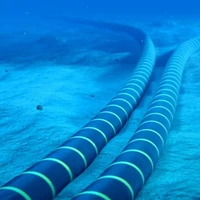
Kayhan editor Hossein Shariatmadari, who has advocated closing Hormuz to US, Israeli and allied shipping for years, has now proposed that Iran’s military and the Revolutionary Guards disrupt or sever international fiber-optic cables beneath the Persian Gulf and the Strait of Hormuz.

Shariatmadari argued that such action could be “many times more frightening and dangerous for the enemy” than keeping the strait closed.

Critics seized on the proposal as evidence that even proponents of maximum pressure were searching for additional leverage.

Journalist Hassan Abbasi warned that disrupting the cables would not hurt Iran’s adversaries alone, because the country’s own trade, banking, communications and digital economy depend on the same infrastructure.

That is increasingly the question running through the debate in Tehran: not whether Iran can impose costs through Hormuz, but how long it can do so before the weapon begins imposing comparable costs on Iran itself.

US sanctions Turkish bank as Iran financial crackdown widens

Sep 4, 2026, 20:58 GMT+1
100%
File Photo: Signage is seen at the United States Department of the Treasury headquarters in Washington

The United States on Friday sanctioned Turkey’s Golden Global Bank and two subsidiaries over alleged financial dealings with Iran, escalating a campaign targeting foreign institutions accused of helping Tehran move money around sanctions.

The Treasury Department said Golden Global Yatirim Bankasi and its asset-management and leasing subsidiaries had facilitated tens of millions of dollars in transactions for the Islamic Revolutionary Guard Corps-Quds Force and provided Iranian institutions with access to international banking channels.

The action was taken under Operation Economic Outcast, a campaign launched on August 24 to target financial networks and foreign institutions that Washington says help sustain the Islamic Republic’s economy and circumvent sanctions.

Treasury alleged that the Istanbul-based bank was established to help Iran’s shadow-banking network transfer oil revenues from China to Turkey, where money exchangers could convert the proceeds into cash and gold. It also accused Golden Global of knowingly offering correspondent banking services that enabled transactions through accounts controlled by the IRGC-QF and its proxies.

Golden Global rejected the allegations, saying it had complied with domestic and international banking and compliance requirements and had no direct or indirect dealings with the individuals and entities named in the US sanctions decision. The bank said it would pursue its legal rights over what it called unfounded allegations.

Iran International also contacted Golden Global for comment on the Treasury allegations and whether it planned to challenge the designation, but had not received a response at the time of publication.

The three entities were added to the Treasury’s Specially Designated Nationals list, blocking property and interests in property under US jurisdiction and generally barring US persons from transactions involving them. Treasury also issued a general license allowing transactions necessary to wind down dealings with the sanctioned entities.

Treasury Secretary Scott Bessent described the designation in an interview with America’s Voice News as “code for you are out of business” and said another bank could be sanctioned as soon as next week.

“We know who you are, you know who you are, it’s over,” Bessent said, adding that US allies were assisting the campaign.

The move comes a week after Washington targeted the UAE operations of Banque Misr, Egypt’s second-largest bank, using a different legal mechanism.

Rather than imposing a full OFAC designation, the Treasury’s Financial Crimes Enforcement Network proposed a rule under Section 311 of the USA Patriot Act that would prohibit US financial institutions from opening or maintaining correspondent accounts for Banque Misr UAE. The proposal is subject to a public comment process before it can be finalized.

Treasury estimated that Banque Misr UAE processed about $1.8 billion between January 2024 and June 2026 for 103 companies potentially linked to Iranian shadow-banking networks.

  • US crackdown leaves much of Iran’s shadow banking untouched

    US crackdown leaves much of Iran’s shadow banking untouched

An Iran International investigation subsequently found that funds originating from Iran’s central bank were being directed to accounts at Banque Misr’s UAE operations as early as November 2022, based on leaked correspondence and transaction records from sanctioned Iranian lender Bank Parsian. The investigation found no evidence that the foreign banks involved knowingly facilitated sanctions evasion.

The Golden Global designation represents a further escalation from the Banque Misr action. Bessent told Reuters last week that Treasury expected to announce new secondary sanctions roughly every week, initially focusing on banks.

“You’re going to see a lot more of these every week,” he said. “We’re starting with the banks, and we’re telling the banks it’s not okay to have Iranian money and to aid the regime.”

The campaign marks an effort by Washington to move beyond already-sanctioned Iranian institutions and target the foreign financial infrastructure that US officials say allows Tehran to turn overseas revenues into money it can use.

When launching Operation Economic Outcast on August 24, Bessent said Washington’s objective was to “sever every economic lifeline” sustaining the Islamic Republic. He also appealed directly to Iranian soldiers facing economic hardship and invoked the fall of the Berlin Wall, when East German forces ultimately declined to fire on civilians.

Friday’s action also marked the first time a bank in a NATO member state had been targeted under the new campaign, according to Reuters, underscoring the widening reach of Washington’s effort as Treasury signals that further action against foreign banks is likely to follow.

Could Hormuz offer a way out of the US-Iran war?

Sep 4, 2026, 20:09 GMT+1
•
Behrouz Turani
100%
File Photo: Vessels in the Strait of Hormuz

The Strait of Hormuz has become one of the most dangerous points of leverage in the US-Iran war, but it may also offer Tehran and Washington their clearest route back to negotiations.

Reports on Friday, including by the Financial Times, indicated that mediators were working to establish a framework for possible fresh talks.

Iranian and Omani foreign ministers have already discussed creating a temporary shipping corridor as a step toward a more permanent arrangement.

Such a deal offers something increasingly scarce after six months of war: a face-saving compromise. Tehran could present it as recognition of its role in securing the strait, while Washington could claim it had restored freedom of navigation.

The possibility comes after months of strikes, economic pressure and intermittent diplomacy have failed to break the deadlock.

Iran’s restrictions on maritime traffic through Hormuz have meanwhile turned the vital energy corridor into one of Tehran’s most important bargaining chips.

A route back to talks

The moderate Fararu website quoted Andreas Krieg, a Middle East security expert at King’s College London, as describing an agreement over Hormuz as the most plausible route from direct confrontation toward broader negotiations.

A limited shipping agreement would not resolve disputes over Iran’s nuclear program, sanctions or regional security. But it could provide a confidence-building measure without requiring either side to publicly concede defeat.

The alternative paths being discussed in Iranian media are considerably darker.

Economic escalation

One is an intensification of the economic confrontation already underway.

Washington has shifted increasingly toward aggressive economic pressure through secondary sanctions under “Operation Economic Exclusion,” alongside its maritime blockade and the threat of further strikes.

Iran’s counter-strategy is to make that pressure costly for others. By restricting shipping and threatening regional energy infrastructure and trade routes, Tehran can force Persian Gulf states and other international actors to bear some of the economic consequences.

The US strategy has its own limitation: China. Enforcing secondary sanctions against major Chinese financial institutions would carry considerably greater economic and geopolitical risks than targeting smaller intermediaries.

Back to military action

Another possibility is renewed large-scale military confrontation.

A collapse in diplomacy, failure of economic pressure or a high-casualty Iranian attack on US forces could trigger further American and Israeli strikes, followed by Iranian retaliation.

Recent attacks on southern Iran have already shown how quickly economic and maritime confrontation can return to the battlefield.

Civilian casualties, including those from a strike on a residential building hosting a wedding, have further raised the costs of escalation, although responsibility for that attack remains under investigation.

A war without an end

Perhaps the bleakest scenario is also the least dramatic: neither diplomacy nor escalation produces a breakthrough.

Instead, the conflict settles into prolonged attrition involving intermittent strikes, maritime disruption, cyber operations, sanctions, covert economic measures and nuclear pressure.

That prospect helps explain the significance of the tentative diplomacy around Hormuz.

The strait has become one of Iran’s most powerful instruments of pressure, imposing costs far beyond the battlefield. Yet that same leverage may now provide the basis for an agreement neither side has to describe as capitulation.

After six months in which war, economic pressure and diplomacy have all failed to break the deadlock, the waterway at the center of the confrontation may also offer the narrowest route out of it.

If Britain backs US plan, Iran's London bank shuts down on October 22

Sep 4, 2026, 14:40 GMT+1
•
Mohamad Machine-Chian
100%

A bank owned by the Iranian state is still open in London, operating on a temporary permission from the British Treasury that expires on October 22. Renewing it, or letting it lapse, is Britain's answer to Washington's campaign to shut Iran's banks for good.

On Monday, August 24, Treasury Secretary Scott Bessent announced Washington's new campaign against Iran's regime: Operation Economic Outcast. The objective, in his words, is "to sever every economic lifeline that sustains this tyrannical regime until Tehran stands alone."

More than 60 entities, individuals and vessels were designated in the first round. But among all the institutions Bessent named, one stood out: Bank Melli, one of the Iranian state's largest banks, was the only one whose every foreign branch, he said, "must be shuttered and dark."

Bessent also issued a warning to anyone tempted to help: "Any entity that facilitates money laundering on behalf of Iran will be removed from the U.S. dollar system. The clock just started ticking."

Britain has made a narrower accusation. It designated Bank Melli's London subsidiary under its Iran nuclear sanctions regime, and nothing in the bank's UK filings alleges money laundering. Two governments reached the same bank by different legal routes.

Eleven months after Britain sanctioned it, Melli Bank plc still holds a British banking license. It still seats a board, still meets a payroll in London, still files audited accounts. Every asset frozen, every new customer barred, and it remains a bank. Shuttering it is a separate act, and Britain is the only government that can perform it.

  • Iran or the dollar? US makes an example of Banque Misr

    Iran or the dollar? US makes an example of Banque Misr

A British bank, owned by the Islamic Republic

Bank Melli operates branches and subsidiaries in about ten countries and territories, from the United Arab Emirates to Germany. Its London operation is a company in its own right: Melli Bank plc is registered in England, with a full banking license from Britain's financial regulators, the same authorities that supervise Barclays and HSBC.

Every share of it belongs to Bank Melli Iran, which belongs to the Iranian state. Until April 2026, the chairman of its London board was simultaneously the chief executive of the parent bank in Tehran.

Being a British company comes with a British obligation: publishing audited financial statements for anyone to read. The latest set, 54 pages covering 2025, was filed with the UK corporate registry in June. It amounts to something rare: an inside view of a regime-owned bank as the walls close in.

The accounts also leave no doubt about what the bank was for. Its core business for four decades was financing trade between Iran and Europe, mainly through letters of credit, the standard instrument that guarantees payment in cross-border trade.

The bank's own filings call Iran its "niche market" and say about 92% of its revenue was earned in euros, in what it calls the Eurozone–Iran trade corridor. A €363 million institution, with €258.8 million in capital that ultimately belongs to the Iranian state, existed inside the British financial system to keep money flowing between Iran and Europe.

And business was good, right up to the end. In 2024 the bank recorded its best profit since 2014, €2.4 million. In 2025 its fee income from trade finance surged another 71%, a boom cut short in late September, when the sanctions arrived.

What a severed lifeline looks like

In August 2025, Britain, France and Germany triggered the UN "snapback." The restored sanctions took effect on September 28. The next day, Britain and the European Union sanctioned Melli Bank plc itself.

Since then, the bank has been forbidden from writing a new loan or taking a new customer. Its own accounts describe what remains as the "orderly management" of existing assets and liabilities in a controlled, non-trading environment.

The numbers show what that means in practice:

  • The bank holds about €98 million in deposits that it is not licensed to repay, even as €88 million of them come due. Most of that money belongs to Iranian financial institutions that are themselves under sanctions. Sanctioned depositors, sanctioned bank: the money is simply locked between them.
  • €71 million of the bank's own money is stuck at other banks that hold its accounts, unavailable "due to external restrictions." What the bank can actually reach is about €30 million.
  • Iranian banks owe it €36.5 million in payments that fell overdue during 2025. A year earlier, that figure was zero.
  • Nearly three-quarters of its assets, €259.9 million, are claims on Iran, mostly money owed by Iranian banks. These are the assets that have to go somewhere if the bank stops existing.

The bank's British auditor has formally warned of "material uncertainty" over whether it can continue as a going concern. Its Hong Kong staff left in January when a payment license for their salaries failed to arrive in time. Layoffs began in London in December.

The Tehran representative office is closing. Four board members have departed in little over a year; three remain. Yet seniority still pays: total board compensation rose to €905,000 in 2025, and the highest-paid director received a €615,000 package including rented housing, a company car and private health insurance, in the same year the bank booked €1.26 million in severance costs.

What keeps the lights on at all is a permission slip. A general license from the UK Treasury, issued three and a half weeks after the designation, allows exactly four kinds of payments: wages and severance for its UK-based staff and directors, their pensions, IT bills, and the accountant's fee.

Every month the bank must report every payment it makes, line by line, to the Treasury. Even its lawyers require a separate license; legal and professional costs jumped 57% last year to just over €1 million, more than five times the bank's entire 2025 profit of €181,000, itself down 92% from the year before.

Britain's decision

On August 25, the day after Bessent spoke, Britain's Chancellor John Healey welcomed Operation Economic Outcast, noting that Britain has imposed more than 240 sanctions on Iran since Labour took office in 2024 and pledging to work with Washington on economic pressure.

Britain had sanctioned Melli Bank plc eleven months earlier on grounds of its own, under a nuclear regime unrelated to the money laundering Bessent alleges. The endorsement answers a different question: on the objective, Britain is with Washington.

That question has been open since the war began, with American officials making little secret of their view that British cooperation has run behind Washington's expectations. Melli Bank plc offers a cheap way to close the gap. The bank has been barred from trading since September. Its depositors are overwhelmingly sanctioned Iranian institutions. Its staff is already leaving. Letting the license expire hands Washington a closed bank at almost no cost to Britain.

Britain sanctioned the bank in September 2025, and weeks later the Treasury granted it Interim Necessities General Licence INT/2025/7628424. Renewal followed in April 2026. Every British and European sanction on Melli Bank plc that is in force today was in force then. Washington announced Operation Economic Outcast four months later, on August 24. The license expires on October 22.

The bank expected the signature to come again. Citing legal advice, its accounts say it anticipated renewal, and it behaved accordingly: it had added a new board member weeks before snapback, signed a new Hong Kong office lease a month after being sanctioned, and planned to rehire staff there by this summer.

Its report contains no wind-down plan, no closure scenario, and not a word about what happens to the €98 million in deposits or the €258.8 million in capital if the license lapses.

If the license lapses, the bank cannot lawfully pay its staff or its auditors, and an English company that cannot pay its auditors does not remain a going concern. Insolvency would put Melli Bank plc in front of a British court, which would have to decide what becomes of €98 million owed mostly to sanctioned Iranian banks and €258.8 million of capital belonging to the Iranian state.

Neither the bank nor the Treasury has said what that process would look like. The difficulty of it is the best reason the Treasury has to sign again. Insolvency would release nothing, though: sanctioned money stays frozen whoever administers it.

A freeze is a pause, and this bank has lived through one. The European Union sanctioned Melli Bank plc in 2008. The nuclear agreement lifted those sanctions in 2016, and the bank went back to financing Iranian trade, on its way to its best year since 2014. Everything imposed on it since 2025 could come off the same way, in a deal. Closure ends that.

A surrendered license, distributed capital and a dispersed staff leave nothing to restart, and any future British government minded to have this bank back would have to authorize an Iranian state-owned bank from the beginning.

That is what makes this obscure bank in London worth watching. Operation Economic Outcast rests on a claim that a regime's financial lifelines can be cut in practice. Melli Bank plc shows the machinery running end to end: international snapback, allied designations, a frozen balance sheet, a departing staff, and one administrative decision standing between a regime-owned bank and closure.

On October 22 the Treasury has two options. It can sign the license again and keep Melli Bank plc alive, or let it lapse and close a British bank owned by the Iranian state. Bessent said the clock just started ticking. In London, it already has an alarm set.

---

This report is based on Melli Bank plc's Annual Report and Financial Statements for 2025 and prior years, filed at the UK's Companies House (company no. 04152338); the Companies House register of directors; the UK Sanctions List entry for Melli Bank plc under the Iran (Sanctions) (Nuclear) (EU Exit) Regulations 2019; the UK Treasury's Interim Necessities General Licence INT/2025/7628424 and its Legal Services General Licence INT/2025/7323088, both published on gov.uk; Council Decision 2008/475/EC, which first listed the bank in the European Union, and the delistings of January 2016 under the nuclear agreement; Treasury Secretary Scott Bessent's remarks of August 24, 2026, announcing Operation Economic Outcast; the UK Chancellor's statement of August 25, 2026; and Iranian press reporting on the removal of Abolfazl Najarzadeh as chief executive of Bank Melli Iran.