Khamenei aide warns Hormuz lever must not be weakened in any war-ending deal


Mohsen Rezaei, a military adviser to Mojtaba Khamenei and a former commander of the Revolutionary Guards, warned that the Strait of Hormuz and the Islamic Republic’s regional “authority” must not be weakened in any deal to end the war.
Rezaei told the state TV that the war must end in a way that preserves the Islamic Republic’s deterrence for the next 50 years, signaling continued resistance among senior military figures to any arrangement seen as limiting Iran’s regional leverage or control over Hormuz.
He said the United States had been recognized as “the defeated criminal” in the war and warned that any enemy mistake would face a harsher response.
“In the armed forces, we respond to the enemy’s mistake much more severely than what it was,” he said.



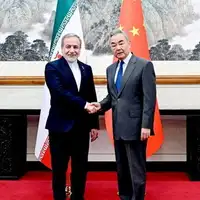

US President Donald Trump said the preliminary agreement between Washington and Tehran is “very popular,” citing a poll showing majority support for the deal.
In a post on Truth Social, Trump shared an image of a Quantus Insights survey on the US-Iran agreement to stop hostilities, reopen shipping through the Strait of Hormuz, and begin 60 days of talks on Iran’s nuclear program and sanctions.
“Very popular agreement, except for the Fake News and their partner, the Dumocrats!” Trump wrote.
According to the poll of 1,000 likely voters conducted from June 16 to 17, 56% of respondents said they approved of the agreement, including 43% who strongly approved and 13% who somewhat approved.
The survey showed 13% disapproved, while 16% neither approved nor disapproved and 15% said they were not sure.
The Iran MoU lets Washington “dial up and dial down” relief depending on Tehran’s conduct, Vice-President JD Vance told CBN News.
He said there would be “no American tax dollars,” even if Iran complies, but sanctions relief and other benefits could increase if Iran “behave[s],” stops funding terrorism and accepts long-term inspections.
Iranian Deputy Foreign Minister Saeed Khatibzadeh said the United States must ensure Israel complies with the terms of the memorandum of understanding between Tehran and Washington, adding that Iran is ready to proceed “step by step” if the other side shows the same level of seriousness.
“The United States must make sure that Israel abides by the provisions of the memorandum of understanding between Tehran and Washington,” Khatibzadeh told Al Jazeera. “We are ready to move forward step by step, if the other side shows the same degree of seriousness.”
Khatibzadeh said Iran seeks “peace on all fronts, including Gaza,” adding that Lebanon was included in the MoU because of its direct connection to the conflict.
“There will be no peace or stability in Lebanon and the region without an end to occupation and Israel’s adherence to international law,” he said.
On the Strait of Hormuz, Khatibzadeh said Tehran will continue providing shipping services in coordination with Oman and in accordance with international law. He said Iran will not charge transit fees during the 60-day period of the agreement, but will introduce a new mechanism for managing the waterway afterward.
The memorandum of understanding signed on Thursday has prompted fresh hopes of an economic revival in Iran. But even a successful US-Iran agreement may do far less for the country's oil industry than many supporters expect.
Tehran’s challenge is no longer simply one of sanctions. Iran's oil and gas sector faces a combination of structural, technical, financial and geopolitical obstacles that cannot be quickly resolved, even if the agreement ultimately leads to a broader settlement with the United States.
The reality is that Iran's energy sector is no longer constrained primarily by its ability to sell oil. Its greater challenges lie in sustaining production, attracting investment, accessing advanced technology and reconnecting to the global financial system.
Aging infrastructure, declining capacity
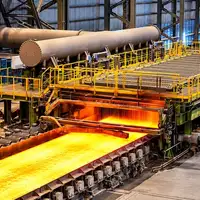
Much of Iran's oil and gas infrastructure has reached the latter half of its operational life. Years of underinvestment, limited access to modern technology and the departure of major international energy companies have left many fields grappling with increasingly complex technical problems.
The challenge extends far beyond the natural decline of mature fields. Veteran figures within Iran's energy industry have repeatedly warned about reservoir degradation, declining pressure, scaling, well damage and the growing difficulty of maintaining stable production.
Former oil executives and industry specialists say a significant share of the sector's efforts is now devoted to managing technical problems that require equipment and expertise not readily available inside the country.
Nowhere is this more evident than in South Pars, the giant gas field that underpins Iran's energy security. Natural pressure decline began years ago, and reversing it will require tens of billions of dollars in investment, advanced offshore infrastructure and the participation of companies that are predominantly based in the West.
Even if political barriers disappeared tomorrow, the planning, engineering and construction required for such projects would take years—time an economy struggling with inflation, budget deficits and capital shortages can ill afford.
World not waiting for Iranian Oil
Many discussions about Iran's future still view today's energy market through the lens of a decade ago.
Before sanctions tightened, a significant portion of the global market relied on Iranian crude. The world of 2026 looks very different.
The United States has become one of the world's largest energy producers and exporters. Canada, Brazil and Guyana have expanded output dramatically.
Qatar and the United States have transformed the global LNG market, while major consumers have spent years diversifying supply chains and reducing dependence on any single producer.
Many customers that found alternative suppliers during years of sanctions are unlikely to return simply because restrictions are eased. Re-entering global markets requires not only competitive pricing but confidence in Iran's long-term reliability as a supplier.
The banking problem
Even if Washington permits the return of major energy companies to Iran, another obstacle remains: the international financial system.
The experience of the 2015 nuclear deal demonstrated that political agreements do not automatically translate into investment flows. Despite official support from Western governments, many major banks remained unwilling to accept the risks associated with doing business in Iran.
Crucially, the Islamic Republic is currently on the FATF blacklist, and the process of exiting this list entails a time-consuming verification period. Iran's failure to meet FATF standards, concerns over financial transparency, money-laundering risks and the extensive role of military-linked institutions in the economy continue to discourage foreign investors.
For many global financial institutions, both credit risk and reputational risk associated with Iran remain exceptionally high.
Russia is not a substitute
In the absence of Western companies, Tehran has repeatedly looked to Russia as an alternative partner.
Yet the experience of the past two decades suggests Moscow has shown limited interest in helping Iran re-emerge as a major competitor in global energy markets.
Even Russian firms with significant technical capabilities have, at various points, slowed, suspended or withdrawn from Iranian projects.
Russia's interests do not necessarily align with a full-scale revival of Iran's energy sector.
As a major energy exporter itself, Moscow has strong incentives to preserve its own position in global markets rather than facilitate the rise of another competitor.
Regional stability
There is another actor in this equation that often receives less attention than it deserves: the Persian Gulf states.
Iran’s Arab neighbors are undertaking some of the largest investment programs in their history. Infrastructure, artificial intelligence, logistics, technology and tourism have become central pillars of their economic strategies.
From their perspective, the overriding concern is not ideology but stability.
Rising geopolitical tensions have already increased insurance costs, raised financing expenses and complicated long-term investment planning across the region.
As a result, many in the region have concluded that even a successful Tehran-Washington agreement may not, by itself, provide the level of certainty required for the massive investments envisioned under their long-term development plans.
Taken all that together, one can argue that Iran’s oil economy faces far more than a sanctions problem.
Even if the newly signed memorandum evolves into a broader deal, rebuilding Iran's lost energy capacity will require years of work, tens of billions of dollars in investment and the restoration of confidence among international investors and financial institutions.
The agreement signed this week may ease some short-term pressures and improve economic sentiment. But on its own, it is unlikely to reverse the long-term erosion confronting Iran's oil and gas sector.
IRGC Quds Force commander Esmail Ghaani warned Israel in a statement on Friday, invoking Hezbollah and Gaza after recent clashes.
“When I said Hezbollah has its Mersad, you did not pay attention and got trapped,” Ghaani was quoted as saying, apparently referring to Mirsad-1 drones supplied by Iran. “Who will answer for the 100 casualties?”
He also warned that Gaza “has a storm,” adding: “If you move according to the will of your politicians, you will be caught in the storm. Be careful.”