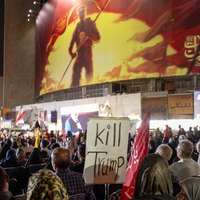
Quick Iran-US deal possible if talks focus on no nukes, Khamenei’s adviser says


Ali Shamkhani said on Thursday that a swift agreement in nuclear negotiations would be within reach if the main issue was Iran’s commitment not to build nuclear weapons, a veteran security figure and long-time adviser to Supreme Leader Ali Khamenei said.
“If the main issue in the negotiations is Iran’s non-development of nuclear weapons, this is in line with the Leader’s fatwa and Iran’s defense doctrine, and an immediate agreement is within reach,” Ali Shamkhani wrote in a post on X.





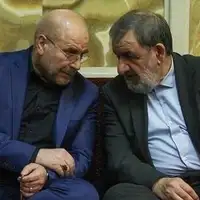

Abolfazl Zohrevand said the latest round of negotiations between Iran and the United States is unlikely to end well, citing recent remarks by President Donald Trump.
“Given the course of events so far, and especially Donald Trump’s two-hour speech in Congress, it seems the negotiations will not have a good outcome,” Zohrevand, a member of parliament’s national security and foreign policy committee, said, according to state media.
He said Washington was still seeking guarantees from Iran “from a perspective it has defined itself,” adding that in his view the United States was seeking Iran’s “surrender.” Zohrevand also said Tehran should respond more forcefully to remarks about regime change or threats against its leadership and suggested negotiations could even have been halted.
Oman's Foreign Minister Badr Albusaidi met Steve Witkoff and Jared Kushner in Geneva to convey Iran’s perspectives and proposals as part of ongoing indirect nuclear talks, Oman’s state news agency said.
The discussions addressed key aspects of Iran’s nuclear program and the guarantees required to reach an agreement covering technical and oversight issues, the agency said.
Albusaidi said efforts are being pursued “with unwavering determination and a constructive spirit,” adding that negotiators have shown openness to “novel and innovative ideas and solutions” aimed at securing what he described as a fair and durable agreement.
Mike Huckabee, the United States ambassador to Israel, said Iran is aware of what steps it must take to resolve tensions peacefully as nuclear talks unfold in Geneva.
“The Iranians know what they have to do if they want to resolve this peacefully,” Huckabee told Ynet, reiterating Washington’s position that any agreement must mean “no enrichment, no nuclear weapons.” He said concerns also extend to Iran’s missile program and regional activities.
Asked whether the negotiations would continue, Huckabee said the outcome depends on Tehran. “I don’t know. It really depends on what they come to the table with,” he said, confirming that US envoys are representing Washington in the talks.
“Let’s hope for some reasonable approach from the Iranians,” he added. “But it’s 47 years and we’re still waiting on one.”
Ministry of Foreign Affairs of Iran said indirect talks between Iran and the United States would resume shortly in Geneva under Omani mediation.
The foreign ministry spokesperson Esmaeil Baghaei said Rafael Grossi, head of the International Atomic Energy Agency, is expected to join the third round of negotiations, as he did in the previous round.
“Our delegation has come to this round fully prepared,” Baghaei said, adding that Iran is participating “with full seriousness to secure our national interests.” The talks are focused on nuclear issues, including sanctions relief and Iran’s nuclear rights, which Tehran has conveyed to the Omani side, the spokesperson said, adding that discussions between the US and Oman began earlier in the day.
Oman's Foreign Minister Badr Albusaidi met Rafael Grossi, head of the International Atomic Energy Agency, in Geneva to discuss technical issues related to Iran’s nuclear file, Oman’s foreign ministry said.
Albusaidi stressed the importance of the IAEA’s professional and technical role in ensuring transparency and credibility in nuclear oversight, it added.