The recent airstrikes by the United States and Israel will not lead Iran to abandon its nuclear technology, Iran’s Foreign Minister Abbas Araghchi said on Tuesday when asked if Tehran would continue to enrich uranium.
“We have made tremendous efforts to achieve this technology, and our scientists have made enormous sacrifices, even losing their lives for this goal,” Araghchi said in an interview with the London-based New Arab website.
“Our people have endured sanctions for this, and a war was imposed on our nation over this issue. No one in Iran will abandon this technology.”
When asked if Iran would reconsider its stance toward the International Atomic Energy Agency (IAEA), he responded, “I imagine that our outlook on the nuclear program and the non-proliferation regime will undergo changes, though I cannot yet determine their direction.”

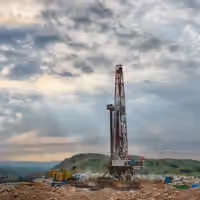
US President Donald Trump's statement that "China can now continue to purchase oil from Iran" merely acknowledged that oil from the Strait of Hormuz won't be disrupted, and was not a signal of sanctions relief, the Wall Street Journal reported citing a senior White House official.
“The President was simply calling attention to the fact that, because of his decisive actions to obliterate Iran’s nuclear facilities and broker a ceasefire between Israel and Iran, the Strait of Hormuz will not be impacted, which would have been devastating for China," the official was quoted as saying.
"The President continues to call on China and all countries to import our state-of-the-art oil rather than import Iranian oil in violation of US sanctions.”
Iranian air defense systems have been activated in several cities including Tabriz, Shahr-e Rey in southern Tehran, and Mashhad, according to local media reports.
However, officials have not confirmed any new Israeli attack.
"No attack has occurred. The air defense is countering micro aerial vehicles and securing the airspace,” Tabnak reported citing the Islamic Revolutionary Guards Corps in East Azerbaijan province.

The Islamic Republic will not return to what it was before the Israeli and American airstrikes, but what comes next is uncertain, experts tell Iran International.
The experts say Iran now faces a defining choice: abandon its decades-old doctrine of hostility toward Israel and the US, or double down and risk collapse.
“It's Ali Khamenei, whose worldview is arguably at the heart of why we ended up in this conflict,” said Alex Vatanka, Senior Fellow at the Middle East Institute and founding director of its Iran Program.
Once seen as untouchable, the clerical state is now reeling—its authority at home weakened and its future uncertain, several Middle East analysts told Iran International.
“What pushback comes from within the regime?” Vatanka asked. “The policies of hardliners, of flexing muscle, having ballistic missiles, acts of resistance, fighting the good fight against US and Israel. That brought this disaster on Iran.”
Tehran failed to defend its airspace, protect officials and loyalists, or safeguard its nuclear and missile programs.
While Iran has long fomented regional instability, this is the first time in decades that war reached its own soil. That may prove a turning point.
“So the war against Israel and the United States, that was sold as something you do outside of Iran's borders. That war suddenly was happening on Iranian soil, literally in cities and towns where people live,” Vatanka said.
Change is coming
That internal tremor may not lead to collapse—but it could produce serious transformation.
“I do expect significant aftershock waves within the structure of the regime,” said Avi Melamed, a former Israeli intelligence official and founder of Inside the Middle East: Intelligence Perspectives.
“Change within the regime, not the regime change,” Melamed said. “But again, it may be that the change within the regime will result in dynamic, that will result in, at the end of the day, change of the regime.”
Meanwhile, the Trump administration is taking a victory lap. President Trump posted Tuesday on Truth Social that China can now resume buying oil from Iran—a sharp turn from his previous threats.
“China can now continue to purchase Oil from Iran,” Trump wrote. “Hopefully, they will be purchasing plenty from the US, also. It was my Great Honor to make this happen!”
Only a month after warning the world against buying Iranian oi, Trump told reporters he hopes Iran will be “a great trading nation.”
Experts say the fact that Iran and Israel accepted a ceasefire signal that neither side wanted a prolonged conflict.
Some level of political change now appears unavoidable, according to Kamran Matin, Associate Professor of International Relations at the University of Sussex.
“The kinds of concessions that Iran will be compelled to make in the likely post-ceasefire talks over its nuclear and missile projects far exceeds the political ideological constraints of the current leadership of Khamenei,” Matin said.
“He has been forced to contradict himself on major matters of national security on a rather frequent basis since October 7.”
For now, observers are watching closely to see whether the Islamic Republic—feeling weakened—lashes out internally.
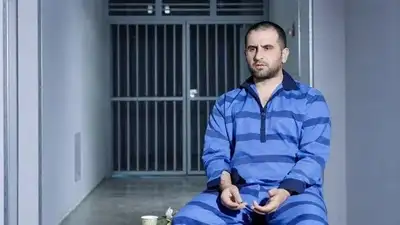
On Monday, Iranian authorities executed Mohammad-Amin Mahdavi-Shayesteh for allegedly spying for Israel.
“The regime might seek to alleviate its utter humiliation by dramatically intensifying its repression of dissidents and even repeat the 1988 mass execution of political prisoners,” Matin warned.
Such a move could spark widespread protests—potentially pushing an already fragile Islamic Republic toward collapse.
The airstrikes may have ended, but the real battle for Iran’s future is only beginning. Israeli strikes shook the Islamic Republic to its core. Its leadership is bruised, its power structure exposed, and its legitimacy at home deeply eroded.
Russia's UN envoy says US and Israeli airstrikes directly violated the UN Charter.
"The actions of the US and Israel directly violated the UN Charter," Ambassador Vasily Nebenzya told the Security Council on Tuesday.
"They constitute a direct and very dangerous challenge to the authority of the NPT, especially Iran's right guaranteed under Article 4 of the treaty to use nuclear energy for peaceful purposes, including uranium enrichment."
US envoy to UN says the attack on Iran's nuclear sites was consistent with UN charter.
"These strikes, in accordance with the inherent right to self-defense, collective self- defense, consistent with the UN Charter, aimed to mitigate the threat posed by Iran to Israel, the region, and to more broadly international peace and security," Ambassador Rosemary Anne DiCarlo told Security Council on Tuesday.
"Following this historic operation, President Trump immediately coordinated a ceasefire between Israel and Iran," she added.
"We must all urge Iran to seize this opportunity for peace and prosperity and abide by its international obligations."