Two deputy commanders of Iran’s armed forces general staff were killed in Israeli attacks, Iranian state media reported on Saturday, amid Israel’s largest wave of strikes against Iran to date.
Brigadier General Gholamreza Mehrabi, deputy head of intelligence at the Armed Forces General Staff, and Brigadier General Mehdi Rabbani, deputy chief of operations, were both killed in Israeli attacks.
“These commanders, who served during the eight years of the Sacred Defense (Iran-Iraq war), were martyred in a cowardly attack by the Zionist regime,” the Armed Forces' public relations office said in a statement

Israeli airstrikes on Iran’s nuclear infrastructure have inflicted damage on aboveground facilities but have not destroyed the deeply buried centrifuges or the country’s stockpile of near-weapons-grade uranium, the Washington Post reported on Saturday, citing nuclear experts and imagery analysis.
“We struck at the heart of Iran’s nuclear enrichment program,” Israeli Prime Minister Benjamin Netanyahu said following the attacks. However, analysts suggest that the core of Iran’s capability—particularly at hardened sites like Fordow and Natanz—remains intact.
“Until I know that Fordow is gone and until I know where that highly enriched uranium is and whether it’s usable, I consider us on the clock,” said Richard Nephew, a former US nuclear negotiator and fellow at the Washington Institute for Near East Policy.

Fordow and Natanz, Iran’s two main enrichment facilities, are fortified deep underground.
Experts cited by the Washington Post said only the US-made Massive Ordnance Penetrator could potentially damage them—an option not available to Israel.
“Israel can damage key Iranian nuclear facilities, but Israel can’t destroy hardened sites like Fordow without US military assistance,” said Kelsey Davenport of the Arms Control Association.
According to satellite imagery reviewed by analysts, the strikes at Natanz knocked out electrical infrastructure and destroyed a small research facility but spared the underground production site.
“They’ve disabled the facility by destroying the power substation, but they haven’t destroyed the facility in a way that would impact Iran’s long-term breakout capacity,” said Decker Eveleth, a missile and nuclear programs researcher.
Strikes were also reported at other locations, including a uranium metal facility in Isfahan, the heavy water reactor in Arak, and a military base near Tabriz. Yet analysts believe Iran’s enriched uranium and key centrifuges remain untouched.
“The centrifuge production hall at Natanz appears undamaged,” said Jeffrey Lewis of the Middlebury Institute, warning that Iran can continue to produce critical components. “So I presume they’re going to keep on making them.”
Former CIA analyst Kenneth Pollack suggested that Israel may pursue other tactics, including cyberattacks or special operations, to degrade Iran’s program further.
Experts also warned that the attacks could also strengthen hardliners in Iran pushing for an overt nuclear weapons capability. “The political momentum will doubtless shift to the bomb advocates,” said Jim Walsh of MIT.
A senior official quoted by Iran’s state broadcaster IRIB said the country’s military response to Israeli attacks will intensify and expand to include American bases in the region, warning of broader confrontation in the days ahead.
The unnamed source, citing senior military commanders, said that "the war initiated by Israel’s attacks will spread in the coming days to all areas under Israeli occupation and US bases in the region.”
The source added that Iran’s retaliatory actions will not be limited to those already taken and that future strikes “will be painful and regrettable for the aggressors.”


Iran said it may reconsider its participation in the next round of negotiations with the United States following Israel's military strikes, which Tehran claims could not have occurred without US approval.
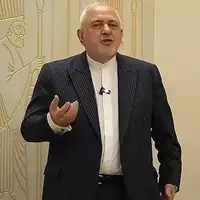
“It is still unclear what decision we will make by Sunday regarding the upcoming talks,” Foreign Ministry spokesperson Esmail Baghaei said in remarks carried by state media.
Baghaei accused Israel of acting with at least a green light from Washington, saying, “It is inconceivable that Israel could commit such adventurism and warmongering in the region without coordination or conscious approval from the United States.”
He added that Israel’s actions had rendered dialogue meaningless and said the US government bears responsibility for the consequences of the “reckless and unlawful” Israeli attack.
“This shows once again that American policymakers remain heavily influenced by this regime (Israel),” Baghaei said, warning that Israel aims to drag Western countries into a wider regional conflict.
An Israeli official told Iran International that Israel’s strikes in Iran are limited to precision strikes on military and government-linked targets, while warning that any attacks by Tehran on Israeli civilians will prompt a firm response.
“In any instance where Iran targets civilians — as occurred last night — Israel will retaliate to establish a clear boundary,” the official said. However, the source emphasized that even in retaliation, “Israel will not target Iranian civilians.”
An overnight explosion at Tehran’s Mehrabad Airport occurred near hangars used for fighter jets behind Terminal 4 and did not impact the airport’s runways or core infrastructure, Iranian state media reported on Saturday.
Authorities said the blast did not damage main airport buildings or operational facilities.
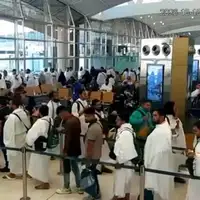
Despite the limited damage, all airports across Iran, including Mehrabad, remain closed amid heightened tensions.