• العربية
  • فارسی
Brand
  • Iran Insight
  • Politics
  • Economy
  • Analysis
  • Special Report
  • Opinion
  • Podcast
  • Iran Insight
  • Politics
  • Economy
  • Analysis
  • Special Report
  • Opinion
  • Podcast
  • Theme
  • Language
    • العربية
    • فارسی
  • Iran Insight
  • Politics
  • Economy
  • Analysis
  • Special Report
  • Opinion
  • Podcast
All rights reserved for Volant Media UK Limited
volant media logo

Iran uncovers oil pipeline taps amid fuel smuggling crisis

Mar 16, 2025, 12:38 GMT+0

Iranian authorities have discovered and sealed four illegal taps on a major oil pipeline near the southern city of Bandar Abbas as the country grapples with a massive fuel smuggling crisis, officials said on Sunday.

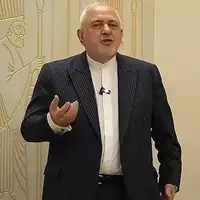
Mojtaba Ghahramani, head of the Hormozgan Province Judiciary, said that the unauthorized diversions were found on a natural gas pipeline between the villages of Sar-Rig and Isin.

"Technical and police measures have been initiated to identify the perpetrators of this fuel theft," Ghahramani said, adding that some of the taps appeared to be newly installed.

Ghahramani repeated the judiciary's past warnings to the Ministry of Petroleum about the need for enhanced monitoring and the installation of advanced metering systems.

The discovery follows heightened scrutiny of fuel smuggling in Iran, with President Masoud Pezeshkian recently decrying the daily loss of 20 to 30 million liters of fuel as a catastrophe amid a nationwide energy crisis.

Economists and officials have increasingly pointed to systemic, large-scale operations, rather than small-time smugglers, as the primary drivers of the illicit trade.

Estimates suggest that up to 50 million liters of fuel may be smuggled out of Iran daily, raising questions about high-level complicity.

"This volume of smuggling cannot be the work of small-time smugglers in border regions. It is definitely done by government entities," economist Hossein Raghfar told local media.

The sheer scale of the operation, involving potentially thousands of trucks or large tankers, has led experts to suspect the involvement of organized networks and even elements within the Islamic Revolutionary Guard Corps (IRGC).

The IRGC controls a significant portion of the country’s transportation networks and border crossings, which, according to economic journalist Reza Gheibi, makes it difficult to imagine that such large volumes of fuel could be smuggled out of the country without the IRGC’s knowledge or involvement.

The lucrative nature of fuel smuggling, driven by the disparity between subsidized domestic prices and higher international rates, has also fueled corruption within government ranks, evidenced by recent official arrests

In December 2022, Aref Akbari, the Public and Revolutionary Prosecutor of Hormozgan Province, announced the arrest of six rural mayors, three employees of the Ministry of Industry, and two members of the Engineering Organization on charges of collaborating with fuel smugglers.

The ongoing energy crisis, marked by power outages and disruptions to industrial and even government activity, has intensified calls for stricter oversight and technological solutions to curb fuel theft.

Most Viewed

US blockade enters murky phase as tankers spoof signals and buyers hesitate
1
ANALYSIS

US blockade enters murky phase as tankers spoof signals and buyers hesitate

2

US tightens financial squeeze on Iran, warns banks over oil money flows

3
INSIGHT

Ideology may be fading in Iran, but not in Kashmir's ‘Mini Iran'

4
INSIGHT

Hardliners push Hormuz ‘red line’ as US blockade tests Iran’s leverage

5
VOICES FROM IRAN

Hope and anger in Iran as fragile ceasefire persists

Banner
Banner

Spotlight

  • Hardliners push Hormuz ‘red line’ as US blockade tests Iran’s leverage
    INSIGHT

    Hardliners push Hormuz ‘red line’ as US blockade tests Iran’s leverage

  • Ideology may be fading in Iran, but not in Kashmir's ‘Mini Iran'
    INSIGHT

    Ideology may be fading in Iran, but not in Kashmir's ‘Mini Iran'

  • War damage amounts to $3,000 per Iranian, with blockade set to add to losses
    INSIGHT

    War damage amounts to $3,000 per Iranian, with blockade set to add to losses

  • Why the $100 billion Hormuz toll revenue is a myth
    ANALYSIS

    Why the $100 billion Hormuz toll revenue is a myth

  • US blockade targets Iran oil boom amid regional disruption
    ANALYSIS

    US blockade targets Iran oil boom amid regional disruption

  • Iran's digital economy battered by prolonged blackout
    INSIGHT

    Iran's digital economy battered by prolonged blackout

•
•
•

More Stories

Iran praises Armenia-Azerbaijan peace agreement

Mar 16, 2025, 11:12 GMT+0

Iran's president has welcomed the recent peace agreement between Armenia and Azerbaijan, expressing Iran's commitment to regional stability, even as reports of border clashes surfaced.

In a phone call with Armenian Prime Minister Nikol Pashinyan, Masoud Pezeshkian expressed his satisfaction with the peace deal, emphasizing Iran's long-standing support for "peace, convergence, and stability in the region, especially among neighbors, while preserving the territorial integrity of countries," according to a statement from the Iranian presidency.

Pashinyan briefed Pezeshkian on the negotiation process. He also acknowledged the development and dynamism in bilateral relations with Iran under Pezeshkian's leadership, according to Iran’s state media.

However, the positive developments were overshadowed by renewed tensions on the ground. On Sunday, Azerbaijan's defense ministry accused Armenian forces of firing on Azerbaijani positions from Armenia's southern Syunik province, a claim Yerevan denied.

The Nagorno-Karabakh conflict, a decades-long dispute between Armenia and Azerbaijan, intensified after the Soviet Union's collapse. Nagorno-Karabakh, known as Artsakh by Armenians, is a mountainous region within Azerbaijan, internationally recognized as such, but until 2023, was predominantly inhabited by ethnic Armenians.

Despite the tensions, both Azerbaijan and Armenia announced on Thursday that they had agreed on the text of a peace agreement, marking a potential breakthrough in the decades-long conflict between the two South Caucasus nations.

Tehran has consistently emphasized its interest in maintaining stability along its northern 44-kilometer border, given the potential for regional conflicts to intersect with ethnic and religious tensions.

Tehran bans advertisements for global brands linked to Israel

Mar 16, 2025, 08:33 GMT+0

Tehran’s city council has voted to prohibit advertisements for global brands associated with Israeli companies such as Coca-Cola and Nestle, expanding the ban to sales in municipal markets and purchases by the city municipality.

Mehdi Babaei, head of the council’s safety committee, said the decision aligns with broader policies.

“Beyond banning advertisements, the sale of such goods in municipality chain stores and fruit and vegetable markets, as well as their procurement by the municipality, is now prohibited,” he said.

The measure explicitly targets brands identified as having Israeli ties, such as Coca-Cola and Nestlé, barring them from using the city’s advertising infrastructure, including billboards and urban media networks.

The council framed the move as a response to directives from Iran’s leadership, citing support for the Palestinian cause and efforts to restrict the economic influence of companies it considers linked to Israel.

The municipality is now tasked with implementing the policy across all advertising spaces under its control, ensuring that no municipality-affiliated stores or markets distribute the affected goods.

Officials say enforcement mechanisms will be detailed in the coming weeks, though past restrictions on Israeli-linked businesses in Iran have often relied on broader national trade policies rather than municipal oversight.

Last year, the Islamic Republic's Supreme Leader Ali Khamenei called on Muslim countries to isolate Israel.

He said Iran “has the definite expectation and suggestion” that Islamic countries sever political and economic ties with Israel, at least until Israel stops its war on Hamas, triggered by the Iran-backed group's assault on Israel on October 7, 2023.

Questionable growth: How Iran’s government skews economic data

Mar 16, 2025, 07:39 GMT+0
•
Dalga Khatinoglu

Amid the worsening economic crisis and deteriorating living conditions, the economic institutions of the Islamic Republic are attempting to present a picture of economic growth.

Mohammad Reza Farzin, the governor of Iran’s Central Bank, unveiled the institution’s new report at a press conference on March 13, presenting various charts to journalists and describing the country’s economic situation as undergoing "acceptable progress."

He even displayed a chart comparing Iran’s economic growth with countries such as the United States, Saudi Arabia, and the Eurozone, based on estimates from the International Monetary Fund (IMF). He tried to persuade the public that Iran's economic growth surpasses these countries, and only India and China show higher growth rates than Iran.

In fact, prices for essential goods have increased by an average of 100% since Iran’s currency began a steep dive in September 2024, and a severe energy shortage shut down many industries.

The surprising issue is that IMF’s estimates about Iran’s economic growth is based on the statistics provided by Iran’s Central Bank to this international entity. Given the opaque and securitized nature of the Islamic Republic’s economy, no international institution has an independent estimate of Iran’s GDP growth.

The another issue is that different institutions of the Islamic Republic even provide contradictory estimates of economic growth, which also starkly contradict other economic indicators.

For example, while Iran’s Statistics Center has reported the country’s GDP growth in the first nine months of the current fiscal year (starting March 21, 2024) at 3.1%, the Central Bank has put this figure at 3.7%.

Contradictions with other indicators

The economic growth rates reported by Iran’s Central Bank and Statistics Center are based on constant 2021 prices. However, their figures conflict with other key economic indicators.

For instance, the Statistics Center claims that the agricultural sector grew by 3.3% from March to December 2024. Yet, its own labor market data shows a steady decline in agricultural employment since 2021, with the sector's share of national employment dropping from 15.4% to 13.7%.

Customs data further challenges these growth claims, showing that Iran’s agricultural imports surged from $11.5 billion to nearly $18 billion over the same period. Meanwhile, agricultural exports, which account for only a third of that amount, have remained largely stagnant. Despite these indicators, the Central Bank reports an even higher agricultural growth rate of 3.7% for the first nine months of the fiscal year.

The natural gas sector presents another discrepancy. While official data from Iran’s Oil Ministry and the International Energy Agency (based on 2024 statistics) indicate that Iran’s gas production growth has remained below 2%, the Statistics Center reports a significantly higher 5.7% growth rate.

Similarly, the industrial sector data raises concerns. Industry insiders report that widespread electricity shortages in the summer and combined electricity and gas shortages in the autumn led to the shutdown of 30% to 40% of industrial capacity for months. Yet, the Central Bank claims that industrial output still managed to grow by 1% in the summer and 3.4% in the autumn.

Further complicating the picture, a previous Central Bank report submitted to the Iranian Parliament’s Research Center estimated industrial growth at 1.7% for the summer and 2.9% for the autumn—figures that contradict its latest claims.

Discrepancies in inflation data

These contradictions are not limited to economic growth estimates. Even inflation statistics from the Central Bank and the Statistics Center differ significantly. While the Central Bank has reported Iran’s 2024 inflation rate at 45%, the Statistics Center has placed this figure at 35%.

Even more surprisingly, the International Monetary Fund, relying on data from Iran’s Central Bank, has reported Iran's 2024 inflation rate below 30%.

The exact real inflation rate in the country remains unclear. However, recent domestic media reports, indicate a sharp doubling of prices for food items, medicines, and other essentials. Meanwhile, official entities estimate much lower figures for these items.

Trump authorizes dozens of airstrikes on Yemen in warning signal to Iran

Mar 15, 2025, 18:41 GMT+0

US President Donald Trump on Saturday ordered large-scale military strikes against dozens of targets in Yemen controlled by Tehran-backed Houthi militants, warning Iran about the consequences of its continued support for the rebels.

"Today, I have ordered the United States Military to launch decisive and powerful Military action against the Houthi terrorists in Yemen," Trump said in a post on his Truth Social account.

He urged the Houthis' sponsors in Iran to "immediately stop their support."

"Do NOT threaten the American People, their President... If you do, BEWARE, because America will hold you fully accountable and, we won’t be nice about it!" the US president said in his warning to Iran.

The New York Times cited US officials as saying the Saturday airstrike, the most significant military action of Trump’s second term so far, "was also meant to send a warning signal to Iran."

The airstrikes against Yemen's Houthis may continue for days or even weeks, Reuters reported, citing an American official.

Trump said the Houthis "waged an unrelenting campaign of piracy, violence, and terrorism against American, and other, ships, aircraft, and drones."

"The Houthis have choked off shipping in one of the most important Waterways of the World, grinding vast swaths of global commerce to a halt, and attacking the core principle of Freedom of Navigation upon which International Trade and Commerce depends," he said.

Trump warned the Houthis that their time is up. "Your attacks must stop, starting today. If they don’t, hell will rain down upon you like nothing you have ever seen before!"

Following the Hamas attack on Israel on October 7, 2023, and the beginning of the Gaza war, the Houthis started massive missile and drone strikes against commercial vessels in an effort to pressure for a ceasefire in Gaza. They imposed a blockade in the Red Sea region, significantly disrupting global shipping routes.

Shortly after Trump's inauguration, Iran directed its allied forces across the Middle East including the Houthis to act with restraint, the Telegraph reported, citing a senior Iranian official in Tehran.

“Forces and allies in the region have been instructed to act with caution as [the regime] feels an existential threat with Trump’s return,” the Iranian official said.

However, the Houthis for the first time fired surface-to-air missiles at a US F-16 fighter jet over the Red Sea last month in what officials described as a significant escalation in the Iran-backed group's ongoing conflict with the US military.

They also fired a surface-to-air missile at an American MQ-9 Reaper drone that the US military was flying over Yemen.

The Houthis have earlier shot down several MQ-9 Reaper drones over the past year. Every single one of these drones costs about $32 million, according to a Congressional report.

Iran's IRGC vows devastating response to potential US attack

Mar 15, 2025, 17:40 GMT+0

The Islamic Republic will give the most severe response should the US president carries out his threat to use the military option against Tehran, the chief-commander of Iran's Revolutionary Guard warned on Saturday.

"We stand firmly against any threat, and if a threat is carried out, we will respond in the most severe manner—decisive, crushing, and devastating," IRGC Chief-Commander Hossein Salami said.

Trump has in a letter to Iran’s Supreme Leader Ali Khamenei offered talks toward a deal on its nuclear program and warned that the alternative was a military intervention.

Salami downplayed Trump's offer of talks as superficial, saying, "The enemy deceitfully talks about direct negotiations under the shadow of threats. Enemies are untrustworthy and do not honor any commitments or agreements."

The IRGC commander said it was the United States that tore up the 2015 nuclear deal between Tehran and world powers and "turned to violent and aggressive measures such as pressure, sanctions, and threats."

"The Iranian nation deeply understands its enemy and never pays attention to its superficial words."