• العربية
  • فارسی
BrandBrand
  • Iran Insight
  • Politics
  • Economy
  • Analysis
  • Special Report
  • Opinion
  • Podcast
  • Live TV
  • Iran Insight
  • Politics
  • Economy
  • Analysis
  • Special Report
  • Opinion
  • Podcast
  • Live TV
  • Theme
  • Language
    • العربية
    • فارسی
  • Iran Insight
  • Politics
  • Economy
  • Analysis
  • Special Report
  • Opinion
  • Podcast
  • Live TV
All rights reserved for Volant Media UK Limited
volant media logo
ANALYSIS

Russia may prove to be a spoiler in US-Iran nuclear mediation

Sam Shahravi
Sam Shahravi

Iran International

Mar 10, 2025, 18:11 GMT+0Updated: 08:52 GMT+0
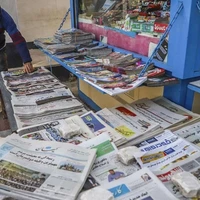
Images of US president Donald Trump and Russian president Vladimir Putin on newspaper front-pages

As geopolitical priorities are scrambled and reordered worldwide in the early days of the Trump administration, a new role in mediating the US-Iran nuclear standoff may be set to give Russia a strong new card in the Middle East.
Bruised by its falling out with Europe and feeling encircled by US-led sanctions, Moscow is likely to act as a spoiler, neither allowing its Mideast ally to be decisively weakened nor fully insulated from Western demands over its nuclear program.

Russia said this week that it seeks an agreement along the lines of an international nuclear deal in 2015 it signed onto along with the United States, signaling it might join the effort to press Tehran on its escalating nuclear enrichment.

The remarks may suggest Moscow believes Iran might limit its nuclear activities in exchange for sanctions relief.

Russia has a vested interest in preventing this issue from escalating into a full-blown crisis. Moscow sees Iran’s economic collapse—driven by US sanctions and chronic mismanagement—as a liability, weakening Tehran’s regional influence.

Iran’s diminishing ability to project power in Syria and Iraq threatens Russia’s own strategic foothold, particularly in Syria, where it has invested heavily. A destabilized Iran could also complicate Russia’s broader geopolitical maneuvers, including its efforts to counter Western influence in the Middle East.

Leave Iran in limbo

Russia benefits from an Iran that is economically viable but not fully reintegrated into the global system—dependent enough on Moscow to remain aligned, yet stable enough to prevent regional turmoil.

100%

Iran is desperate for sanctions relief, but is unlikely to fully abandon its nuclear ambitions, which it views as a core element of national security. It could be persuaded by Russia, however, to limit certain aspects of its nuclear program in exchange for economic concessions without fully relinquishing its capabilities.

However, Supreme Leader Ali Khamenei remains firm in his opposition to direct negotiations with the US, a stance rooted in ideology and mistrust.

In 2013, his policy of “heroic flexibility” allowed for the eventual deal to come about in 2015—the Joint Comprehensive Plan of Action (JCPOA), as it’s known officially. But the context has since shifted. Trump’s withdrawal from the deal in 2018 as well as Iran’s deepening reliance on Russia and China have hardened his position.

Any renewed talks would require guarantees that Iran is unlikely to trust, making a diplomatic breakthrough more difficult.

Avoiding war

Meanwhile, Western powers are increasingly considering a snapback of UN sanctions in the next few months. That could escalate tensions to the point of military confrontation—particularly with Israel, which has consistently warned that it will not allow Iran to develop nuclear weapons.

A direct conflict involving Israel and the U.S. would not only destabilize the region but also undermine Russia’s influence, disrupt energy markets, and divert global attention from Moscow’s priorities, including its war in Ukraine.

Russia’s actual ability to mediate between Iran, Israel, and the U.S. is hard to gauge. US president Donald Trump says he has a good relationship with Russian counterpart Valdimir Putin, which can be a positive.

Israeli prime minister Benjamin Netanyahu is on good terms with Putin too. Although the relationship has been complicated with Moscow's growing military and economic partnership with Tehran, the Kremlin may still be in a position to discourage Tel Aviv from full-scale military action.

Ultimately, Russia’s interest lies in preventing an uncontrolled escalation that could disrupt its strategic ambitions. Moscow does not seek to resolve the Iran nuclear crisis but to manage it—keeping tensions high enough to maintain leverage over both Iran and the West while avoiding outright war.

Most Viewed

Iran readies tankers to run US blockade, threatens Persian Gulf oil if fired on
1

Iran readies tankers to run US blockade, threatens Persian Gulf oil if fired on

2

Iran hardliners push tanker convoy to defy US blockade

3
ANALYSIS

War damage leaves Iran with few options to avert winter gas crunch

4

Iraq begins taking back town held for a decade by Iran’s strongest militia ally

5

Who is Mohammad Javad Bavand, the ex-IRGC official sanctioned by US?

Banner

Spotlight

  • ‘The city smelled of blood’: Witness recalls Iran protest crackdown

    ‘The city smelled of blood’: Witness recalls Iran protest crackdown

  • Iran-linked hackers posed as US expert to target Australian broadcaster
    PODCAST

    Iran-linked hackers posed as US expert to target Australian broadcaster

  • Who gets to be a journalist? Iran seeks greater control over press
    INSIGHT

    Who gets to be a journalist? Iran seeks greater control over press

  • Iran hardliners push tanker convoy to defy US blockade

    Iran hardliners push tanker convoy to defy US blockade

  • War damage leaves Iran with few options to avert winter gas crunch
    ANALYSIS

    War damage leaves Iran with few options to avert winter gas crunch

Banner
Banner
Banner
Banner
Banner
Banner