• العربية
  • فارسی
Brand
  • Iran Insight
  • Politics
  • Economy
  • Analysis
  • Special Report
  • Opinion
  • Podcast
  • Iran Insight
  • Politics
  • Economy
  • Analysis
  • Special Report
  • Opinion
  • Podcast
  • Theme
  • Language
    • العربية
    • فارسی
  • Iran Insight
  • Politics
  • Economy
  • Analysis
  • Special Report
  • Opinion
  • Podcast
All rights reserved for Volant Media UK Limited
volant media logo

Alabama man sentenced to five years for Iran sanctions violation

Feb 26, 2025, 09:59 GMT+0

Ray Hunt, a 71-year-old Alabama resident, has been sentenced to five years in prison for orchestrating the export of US-manufactured industrial equipment to Iran, defying US trade sanctions.

Hunt, operating under aliases including Abdolrahman Hantoosh, Rahman Hantoosh, and Rahman Natooshas, pleaded guilty in July 2024 to charges under the International Emergency Economic Powers Act.

Court documents show that Hunt, through his company Vega Tools LLC, engaged in a systematic effort to supply equipment for Iran's oil, gas, and petrochemical industries.

From at least 2015 until his arrest in November 2022, he worked with two Iranian companies based in Tehran to help them circumvent sanctions.

Hunt's scheme involved a complex network of third-party transshipment companies located in Turkey and the United Arab Emirates (UAE), designed to obscure the true destination of the exported goods.

He also used UAE-based banks to conceal financial transactions.

Hunt deliberately provided false information to shipping companies about the value of his exports, thereby avoiding the mandatory filing of Electronic Export Information with US authorities.

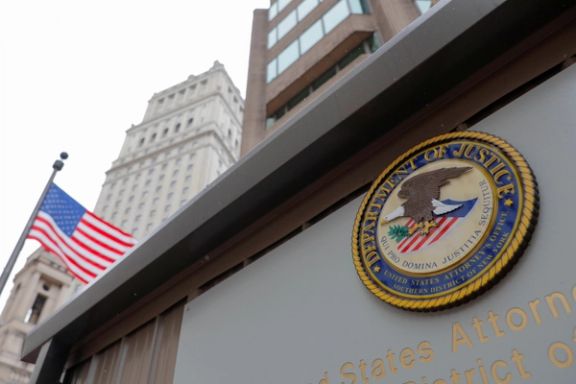
He also misrepresented the intended recipients of the equipment, falsely claiming they were destined for Turkey and the UAE, while fully aware they were ultimately bound for Iran, according to the US Department of Justice. 

He also provided false statements to US Customs and Border Protection officers regarding his business operations during questioning following a 2020 trip to Iran.

Most Viewed

US blockade enters murky phase as tankers spoof signals and buyers hesitate
1
ANALYSIS

US blockade enters murky phase as tankers spoof signals and buyers hesitate

2

US tightens financial squeeze on Iran, warns banks over oil money flows

3
INSIGHT

Ideology may be fading in Iran, but not in Kashmir's ‘Mini Iran'

4
INSIGHT

Hardliners push Hormuz ‘red line’ as US blockade tests Iran’s leverage

5
VOICES FROM IRAN

Hope and anger in Iran as fragile ceasefire persists

Banner
Banner

Spotlight

  • Hardliners push Hormuz ‘red line’ as US blockade tests Iran’s leverage
    INSIGHT

    Hardliners push Hormuz ‘red line’ as US blockade tests Iran’s leverage

  • Ideology may be fading in Iran, but not in Kashmir's ‘Mini Iran'
    INSIGHT

    Ideology may be fading in Iran, but not in Kashmir's ‘Mini Iran'

  • War damage amounts to $3,000 per Iranian, with blockade set to add to losses
    INSIGHT

    War damage amounts to $3,000 per Iranian, with blockade set to add to losses

  • Why the $100 billion Hormuz toll revenue is a myth
    ANALYSIS

    Why the $100 billion Hormuz toll revenue is a myth

  • US blockade targets Iran oil boom amid regional disruption
    ANALYSIS

    US blockade targets Iran oil boom amid regional disruption

  • Iran's digital economy battered by prolonged blackout
    INSIGHT

    Iran's digital economy battered by prolonged blackout

•
•
•

More Stories

Lavrov brought no US message to Tehran, Iranian FM says

Feb 26, 2025, 09:14 GMT+0

Iranian Foreign Minister Abbas Araghchi said that Russian Foreign Minister Sergey Lavrov did not deliver a message from the United States during his visit to Tehran and added that no such message was anticipated.

Speaking to reporters on the sidelines of a cabinet meeting, Araghchi also addressed Iran’s ongoing negotiations with European countries, saying that a new round of talks began in Geneva two days ago, focusing on nuclear issues and other matters.

Earlier in the day, former lawmaker Heshmatollah Falahatpisheh said on X that Lavrov came to Tehran with a message: “Russia and the United States have drawn common red lines for Iran in Riyadh."

Earlier this month, President Donald Trump announced the revitalization of sanctions under his “maximum pressure” policy. He underlined that his main demand is for Iran never to acquire nuclear weapons.

Iran, facing a serious economic crisis, needs to reach an agreement with the Trump administration if it wants to reduce or eliminate the sanctions, but Supreme Leader Ali Khamenei this month banned talks with Washington. Iranian officials insist that they will not negotiate under Trump’s pressure.

Araghchi added that discussions with Europe would continue despite their complexities, as several key questions remain unresolved.

Regarding his talks with Lavrov, Araghchi described them as extensive, covering a wide range of bilateral and regional issues.

He added that the Russian diplomat provided a detailed report on Moscow’s negotiations with Washington and other regional players.

Lavrov’s visit to Tehran sparked speculation in Iranian media about whether he is carrying a message from Washington or pushing Moscow’s own agenda at Iran’s expense.

Iranian media, analysts, and the public had closely scrutinized recent visits by high-ranking foreign officials to Tehran, including Lavrov and the Emir of Qatar, Sheikh Tamim bin Hamad Al Thani, who met with Iran's Supreme Leader Ali Khamenei last week. These visits are widely interpreted as potential mediation efforts between Tehran and Washington or as channels for delivering messages from the Trump administration.

Iran urges Europe, IAEA to resist US pressure on nuclear issue

Feb 26, 2025, 08:50 GMT+0

The Iranian government published a detailed public letter alleging that Europe and the International Atomic Energy Agency are under pressure from the US to be tougher on Iran.

The unsigned 2,000 word article on the government's news website, IRNA, argued that the postponement of a meeting of European foreign ministers with Iran and critical remarks made by the head of IAEA, the UN nuclear watchdog, shows pressure from Washington.

“Has Europe once again settled into the safe zone of inaction, completing Donald Trump's puzzle and allowing him to dominate the scene?", the article said.

European Union foreign policy chief Kaja Kallas said on Monday that a planned ministers-only discussion on Iran was postponed due to the absence of key foreign ministers.

“On Iran, we were supposed to have discussions, ministers-only format, regarding Iran today but because very important foreign ministers were missing, so we postponed this,” Kallas said.

IRNA accused Europe and the IAEA of making contradictory statements about Iran’s nuclear program, arguing that Tehran has the right to unlimited uranium enrichment, as international conventions do not prohibit it. The article also blamed Israeli Prime Minister Benjamin Netanyahu for orchestrating international opposition to Iran.

The article then went on to suggest “confidence building” measures between Europe, the IAEA and Iran, acknowledging that for three decades the two sides have spelled out their positions.

“The JCPOA formula offers the most cost-effective and efficient way to build trust," the letter on IRNA stated, while many consider the deal outdated and even dead.

"Through a series of strategic calculations and negotiations among the parties involved, the 2015 JCPOA became one of the most significant agreements of the past century. These dynamics can be replicated if the European Union abandons its outdated carrot-and-stick approach and engages in transparent dialogue," it added.

Last week, amid Iran's continued denials of building a nuclear weapon, the IAEA chief said the UN body was prepared to help Iran prove it did not seek nuclear weapons.

"We want to make ourselves available, providing technically sound alternatives to eliminate the possibility that Iran develops a nuclear weapon, to prevent Iran, or to help Iran prove that they don't want to develop a nuclear weapon," Rafael Grossi told reporters at Japan’s National Press Club.

However, only last year, Grossi warned that Iran, which has limited IAEA inspections of its nuclear facilities since 2021, was "weeks not months" away from a nuclear weapon.

Trump withdrew from the 2015 JCPOA nuclear agreement in May 2018, calling it a bad deal and demanding more concessions from Tehran. He then imposed strict economic sanctions, which the Biden administration was accused of not fully enforcing.

However, earlier this month, the US president announced the revitalization of these sanctions under his “maximum pressure” policy. He underlined that his main demand is for Iran never to acquire nuclear weapons.

Iran, facing a serious economic crisis, needs to reach an agreement with the Trump administration if it wants to reduce or eliminate the sanctions, but its Supreme Leader Ali Khamenei this month banned talks with Washington.

Iranian officials insist that they will not negotiate under Trump’s pressure.

We don't want to talk anyway, US Senator tells Iran after sanctions protest

Feb 25, 2025, 20:42 GMT+0
•
Arash Aalaei

US Senator Lindsey Graham said Washington was not interested in negotiating with Tehran anyway after Iran said it would not hold talks as long as President Donald Trump's so-called maximum pressure campaign remains in place.

"I don't want to negotiate with Iran either," Graham told Iran International, when asked about foreign minister Abbas Araghchi's comments on the subject.

In a press conference with Russian foreign minister Sergei Lavrov in Tehran, Araghchi ruled out direct negotiations with the United States over the country’s disputed nuclear program as long as the sanctions persisted.

"Iran's position in the nuclear talks is completely clear, and we will not negotiate under pressure and sanctions," he said. "There is no possibility of direct negotiations between us and the US as long as maximum pressure is being applied in this manner."

The South Carolina Republican is a foreign policy hawk who maintains a close relationship with Trump. Graham co-sponsored a bill this month calling for denying Iran a nuclear bomb by any means necessary, days after US President Trump appeared to downplay a military option.

Iran denies seeking a nuclear weapon but the United States assesses that it has stepped up enrichment in order to quickly attain the capability should it wish.

Trump this month reimposed the policy of tough sanctions on Iran from his first term, aimed at driving Iran's oil exports down to zero.

Still, Trump called any reports that a US-Israeli strike would deal Iran a devastating blow "greatly exaggerated" and said he much preferred a deal.

Republican lawmakers appeared less charitable, with West Virginia Senator Shelley Moore Capito telling Iran International that Tehran cannot be believed.

"The way I see it, Iran is a country of terrorism that foments terror certainly acrpss the the Mideast and around the world. I can't imagine that I would trust anything they would say."

Florida Senator Rick Scott said denying Iran a bomb was a main priority.

"I don't think we can allow Iran to have nuclear weapons, and so I think we've got to do everything under our power to make sure they don't have nuclear weapons."

Khamenei defies Trump pressure, but will he hold the line?

Feb 25, 2025, 20:02 GMT+0
•
Ali Afshari

Iran’s supreme leader Ali Khamenei has ruled out talks with the United States despite President Donald Trump’s threat to zero Iranian oil exports, but is Khamenei’s stance final?

Looking from afar, it appears that Khamenei is banking on what he perceives as resilience of the Islamic Republic—the system, as he usually calls it.

If the system can withstand the storm, there may be a chance to negotiate in circumstances less treacherous and toward terms more favorable.

A historical overview could be enlightening.

The 2015 nuclear deal, officially named the Joint Comprehensive Plan of Action (JCPOA), was presented as a diplomatic breakthrough by all sides involved. It only came through, however, after heavy sanctions by the United Nations and the US under Barack Obama.

Khamenei reluctantly allowed talks, first secretly then publicly, calling it "heroic flexibility", and eventually nodded through the ensuing agreement, essentially accepting a halt to Iran’s nuclear activities while preserving the nuclear infrastructure.

But how should we read Khamenei's opposition this time? Is he truly and absolutely, as he claims, against negotiating with Trump?

His history of dual positioning suggests otherwise.

Saving the system at all costs

Contrary to the prevailing narrative, Khamenei’s opposition to a potential detente with Washington is not absolute.

He may not authorize talks if he believes sanctions, even tightened ones, are not detrimental to his system’s survival, or if he thinks other world powers could throw him a lifeline.

But what if he sees no such sign of relief on the horizon?

The Islamic Republic is arguably in a weaker position now than it has ever been, both internally and externally, with no clear outlook for a revival of the Resistance Front of armed allies in the region that it all but lost in the past year.

This reality may compel Khamenei to allow talks as much as it could force him not to, since he wants to negotiate from a position of power. In short, the unfavorable circumstances call for negotiations but the terms of the potential agreement forbid it.

It is Catch-22. What is to be done if you perceive the concessions required of you in an agreement as existentially threatening as refusing to negotiate in the first place?

Flexing over the fence

Khamenei’s answer to that question appears to come in two parts, either limited but aggressive confrontations, or, dialogue through intermediaries. The aim is to alter the conditions of negotiation or muddle through Trump’s second term.

Iran’s supreme leader will not hesitate to announce a variation on the theme of heroic flexibility, If circumstances align with his expectations.

If Khamenei were entirely opposed to negotiations, he would have fully withdrawn from the JCPOA and escalated into full confrontation. Instead, he has halted further uranium enrichment and adopted a defensive regional stance to strengthen his bargaining position and shift negotiation conditions in his favor.

Turning to domestic power dynamics, all factions appear to be singing from the Khamenei sheet, rejecting Trump’s proposal for talks.

Even then, the hardline principalists continue to criticize the relatively moderate administration of Masoud Pezeshkian because while the president himself is fully in line, some figures close to him utter out-of-line views from time to time.

The hardliners—and Khamenei himself—reject the moderates’ de-escalation and diplomacy as strategic solutions. They will keep doing so until they hit an impasse or arrive at waters calmer for roundtable.

In their view, hard power, including the now diminished Resistance, is the country’s primary tool in dealing with external pressure.

It is also imperative to national security. The continued attacks on Pezeshkian aim to prevent him from politically capitalizing on the situation and enhancing the moderates’ position within the system.

Khamenei would likely carry on sitting on the fence, ruling out talks with Trump in words but not deeds. Even in words, Iran’s supreme leader has been markedly measured when talking about the US president.

The Supreme Leader knows, better than everybody perhaps, that he may need to change tack at any moment.
Oil prices rise as US sanctions on Iran fuel supply concerns

Feb 25, 2025, 08:46 GMT+0

Oil prices rose for a second consecutive day on Tuesday as fresh US sanctions on Iran raised concerns over tighter supply, while strong global refining margins signaled steady demand for crude, Reuters reported.

Brent crude futures rose 15 cents to $74.93 a barrel by 0724 GMT. US West Texas Intermediate crude futures climbed 23 cents to $70.93 a barrel.

"In the short term, I continue to think crude oil is looking for a base. The fresh US sanctions announced on Iran overnight will likely assist with this as will the Iraqi oil minister's commitment to rein in its oversupply," Reuters quoted IG market analyst Tony Sycamore as saying.

The United States rolled out new Iran-related sanctions, the Treasury and State Departments announced on Monday, targeting companies and individuals including the head of Iran's national oil company.

The measures target over 30 brokers, tanker operators and shipping firms the treasury department accuses of facilitating the trade from which Iran derives most of its state revenue, including for regional military operations Washington opposes.

They come after President Donald Trump this month reinstated the "maximum pressure" campaign on Iran from his first term, with the stated aim of driving its oil sales to zero.

Iran, the third-largest producer in the Organization of the Petroleum Exporting Countries (OPEC), pumped 3.2 million barrels per day in January, according to a Reuters survey.