Qeshm Air cargo flight bound for Beirut airport turns back mid-flight - report
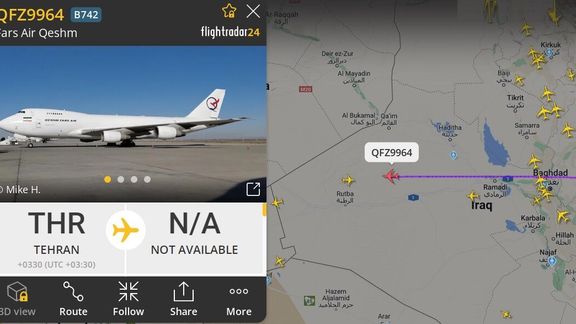
Intelli Times reported that Israel infiltrated Beirut's control tower communications, warning it would block the landing of Iranian Qeshm Air flight QFZ9964. The transport plane has since canceled its landing in Beirut and is heading back to Iran.

Iran-backed Hezbollah confirmed its leader Hassan Nasrallah was killed in an airstrike on the group's central headquarters on Friday, while Israel vowed to continue its wave of assassinations.
The Israeli military "eliminated ... Hassan Nasrallah, leader of the Hezbollah terrorist organization," Israeli army spokesperson Avichay Adraee wrote in a statement on X.
It was later confirmed by Hezbollah. In a statement on their Telegram channel, the group said Nasrallah, who had led the group for 32 years, had "joined his great immortal martyred comrades", calling him "a heroic, bold, brave, wise, insightful and faithful leader".
Meanwhile, the IDF warned of more assassinations to come. "We will reach everyone, everywhere,” it stated, as operations continued in full force. Last weekend, a wave of commanders were killed in a major operation just days after 1,500 operatives were impacted by pager and walkie-talkie explosions in the biggest blow to the group's security in its history.
Later, in a briefing with reporters the IDF spokesman confirmed the killing of Hezbollah chief Hassan Nasrallah and added: "I want to say this very clearly—Nasrallah was one of the world's strongest and most influential terrorists, and one of the terrorists with the most capabilities in the world. He was a real threat, with the blood of thousands of people on his hands."
"Hassan Nasrallah will no longer be able to terrorize the world," the Israeli military said in a post on X on Saturday.
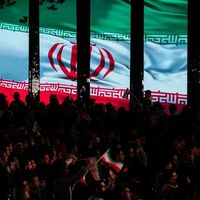
Government-controlled media in Tehran was simply repeating the news about the IDF announcement, while large banners were installed in the capital proclaiming “Hezbollah is alive.” There have been no explicit Iranian threats about a potential retaliation against Israel, although some hardliners have voiced the need for revenge.
Israel launched a new wave of airstrikes on Beirut's southern suburbs and other areas of Lebanon on Saturday, a day after carrying out the massive attack on the southern suburbs of Beirut known as Dahiyeh.
Israel's military also announced on Saturday it has mobilized three reserve battalions to bolster its Central Command defense amid escalating conflict with Hezbollah in Lebanon meaning thousands more troops ready for a possible ground invasion after the most tense 10 days between the two sides since the second Lebanon war.
Earlier in the week the army had reported about other mobilizations, the equivalent of around 4,000 troops with talk of boots on the ground by Israel's commander-in-chief.
Following the assassination, the Israeli military continued to pound Lebanon. On Saturday, the IDF announced that weapons belonging to Hezbollah’s anti-ship missile unit embedded beneath civilian buildings in Beirut were struck. "These weapons posed a threat to international maritime routes, freedom of navigation and Israel's strategic assets in the region," they said.
It was buried beneath six civilian buildings in the heart of Danish in Beirut, the IDF said, with intelligence showing it was to be used imminently.
"For years, the Hezbollah terrorist organization built and developed a precision-guided anti-ship missiles systems, originating from Iran, that were aimed at threatening international maritime freedom and the strategic assets of Israel and the region. These missiles have ranges of hundreds of kilometers," the statement said.
IDF spokesman Daniel Hagari said on Saturday afternoon, "we have challenging days ahead of us," as the country readied for retaliatory actions from Iran's proxies around the region, including Yemen, Iraq and Syria.
In a press conference, he said that Hezbollah leader Nasrallah had been amid talks planning imminent attacks against Israel when he was hit in a precision strike Friday night.
He reiterated Hezbollah's own plans to repeat its own October 7 in an operation called 'Conquer the Galilee'. The IDF "will not let it happen", he warned.
"Our war is not with the Lebanese people, our war is with Hezbollah," he said, adding that for Hezbollah and Nasrallah's victims, "justice has been served".
"Israel doesn't seek a wider escalation. We seek two things. To bring the hostages home after a year in Hamas captivity, and to make sure our borders are safe and secure for our citizens."
The Israeli military has announced that Hezbollah leader Hassan Nasrallah was killed in Friday's airstrike in Beirut.

Zainab Nasrallah, the daughter of Hezbollah Chief Hassan Nasrallah, was reportedly killed in an Israeli airstrike on Hezbollah strongholds in Beirut’s southern suburbs on Friday. The report, first aired by Israel’s Channel 12, has yet to be officially confirmed by either Hezbollah or Lebanese authorities.

Two years after state forces killed almost 100 protesters in southeastern Iran—infamously known as Bloody Friday—a top Sunni cleric has called out Supreme Leader Ali Khamenei for his failure to uphold a promised investigation.
Speaking at Friday prayers in Sistan-Baluchestan, Molavi Abdolhamid denounced the state’s actions as a great tragedy and an injustice rarely seen in the world, renewing his demand for accountability and the punishment of the commanders responsible for the massacre.
Videos posted on social media show that on the eve of the second anniversary of the clampdown, a number of citizens in the capital of Zahedan chanted slogans such as "We swear by the blood of our comrades, we will stand till the end" and "Political prisoners must be released."
Military and security forces were visibly present around the Makki Mosque – one of Iran's largest Sunni mosques. Reports from citizens highlighted a heightened security atmosphere in the city ahead of the anniversary. According to the Hal-Vash news website, military personnel and plainclothes officers set up tents along main streets and roads leading to the mosque, where they conducted searches of worshippers.
On September 30, 2022, amid nationwide protests sparked by the killing of Mahsa Jina Amini, Iranian security forces killed at least 66 people, including children, and injured many more in an assault that marked “Bloody Friday" as a day of unprecedented violence. The reported rape of a 15-year-old girl by a police commander further fueled outrage and intensified the protests.
Multiple human rights groups, along with evidence from activists, victims’ families, eyewitnesses, and extensive documentation, indicate that the actual death toll in Zahedan is likely even higher.
Following the state’s onslaught after that day’s Friday prayers, another 16 people were killed in separate incidents across the city of Zahedan, as the state continued its suppression of dissent. Despite pressure on dissidents, protests continued for months.
Some of the worshippers at this Friday’s prayers at the Mosque held up banners and placards protesting the deadly attack. One of these placards read, "The crime of Bloody Friday will not be forgotten."
Molavi Abdolhamid, the cleric who has sometimes been dubbed ‘Iran’s Sunni dissident,’ became a voice of advocacy for the Sunni minority and broader societal concerns amid nationwide protests against the Islamic Republic.
Although he has called for an end to theocratic rule in Iran, he has also emphasized his stance against using violence to achieve that goal, advocating instead for peaceful reform and dialogue.
Recounting the events of “Bloody Friday,” Molavi Abdolhamid said that if Sunnis were present in institutions such as the Provincial Security Council and the National Security Council, similar incidents would not occur.
Since Masoud Pezeshkian became the President of the 14th Government of the Islamic Republic, Molavi Abdolhamid has repeatedly urged him to employ qualified women, ethnic groups, and religious minorities in the government.
Iran's Deputy Foreign Minister Kazem Gharibabadi has called for an urgent summit of leaders from the Organization of Islamic Cooperation (OIC) member states to be convened as soon as possible. This request comes in response to the "importance and necessity of addressing the Zionist regime’s aggression against Lebanon, as well as the worsening humanitarian situation in Gaza", according to the Iranian Foreign Ministry website.