Did Zarif Inject Momentum Into Iran’s Controlled Election?

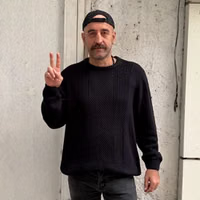
Former Foreign Minister Mohammad Javad Zarif's presence in a TV program on Tuesday to support reformist candidate Massoud Pezeshkian's campaign has made waves on social media.
Former Foreign Minister Mohammad Javad Zarif's presence in a TV program on Tuesday to support reformist candidate Massoud Pezeshkian's campaign has made waves on social media.
Zarif emerged from a three-year period of relative silence and stepped into the political arena to support the only candidate among six hand-picked individuals, who is known as a relative moderate, or a politician who does not belong to any hardliner group.
Journalist Reza Ghobeishavi wrote that "Zarif's involvement has taken the presidential campaigns into a new phase," adding, "This was the real debate, not what happened last night," referring to a largely uneventful TV debate among the six candidates.
In the interview, Zarif embarrassed the hardline participants by revealing their actions to obstruct negotiations between Iran and the United States during the final six months of the Rouhani administration in 2021.
Social media researcher Mohammad Rahbari also mentioned "a new phase in the campaigns," and added a graphic that showed Google search trends highlighting that Zarif's presence attracted more attention than all the news about conservative Mohammad Bagher Ghalibaf and ultraconservative Saeed Jalili, who are believed to be Pezeshkian's main rivals in the election.
Meanwhile, in an ironic post on X, about the mood on Iranian social media before Monday night's debate and wrote: "The general mood before the debate favors Jalili, but the winner of the election is not supposed to be named by Internet robots."
He added: "There are three different views on the subject in Twitter (X):Jalili's supporters who simultaneously work against both Ghalibaf and Pezeshkian (27 percent). This comes while Ghalibaf's supporters comprise only 10 percent of the network in the graphic. The advocates of regime change, and other opposition groups form some 25 percent of the network. They mainly criticize Pezeshkian and call for boycotting the election. The revolutionaries (hardliners) hold only 5 percent of the network of reactions to the debate."
Since late Monday night, thousands of social media users in Iran harshly criticized all of the six candidates for their dull discussions, obnoxious appearance and the banality of Tehran Mayor Zakani's verbal attacks on the other candidates. Many pointed out that the real winner of the debate was conservative cleric Mostafa Pourmohammadi who was neatly dressed and spoke wisely and hesitantly as well as being the only one of the six men who had a real plan devoid of hollow slogans for presidency.
Iranian lawyer Mohammad Ali Bahmani Qajar opined that "The possibility of Pezeshkian's presidency looks like a mirage," and added that "the candidate’s supporters belong to one of the following six groups: Reformist journalists and those who work for reformist organizations and are simply fulfilling their organizational responsibility; those who have political projects to work on; people with ethnic interests; those who wish to fan the election mood; reformists who look forward to getting jobs in Pezeshkian's government, and the simpletons who believe a reformist president can change something in the system.
Many reformists criticized Qajar and said that he was too biased against reformists and Mr. Pezeshkian.
Very few social media users commented on a report that quoted former lawmaker Heshmatollah Falahatpisheh who had said that "Russia is seeking to exert its influence on the Iranian presidential elections." However, they mainly cracked jokes about who could be Russia's favorite candidate.
Social media researcher Mehdi Yahyanejad wrote: "It was a big risk by the reformists to support Pezeshkian. There is still no indication that he would be able to lend a momentum to the campaigns."
The lack of momentum that Yayanejad mentioned may have been reversed by Zarif's fiery attack on conservatives and hardliners on Tuesday.