UK Spots New Iran-Made Drone At Russian Airbase In Crimea

Britain's Ministry of Defense announced Friday that an Iranian Mohajer-6 surveillance and attack drone has been identified at Russia’s Saky Airfield in occupied Crimea.

Britain's Ministry of Defense announced Friday that an Iranian Mohajer-6 surveillance and attack drone has been identified at Russia’s Saky Airfield in occupied Crimea.
“The continued presence of the system in western Crimea is likely evidence of Russia trying to identify threats to Russian ports and vessels following recent Ukrainian successes,” read the statement issued by the ministry on X.
The ministry also shared a satellite image which proved the presence of the Iran-made drone right beside a UAV ground control station in the airfield. The image was taken by an Airbus satellite on February 23.
Though the Mohajer-6 is mostly used in intelligence, surveillance and reconnaissance operations, it can also carry out air-to-surface missile attacks.
According to the UK’s Ministry of Defense, there is “a realistic possibility” that the drone is to be employed to back “Russian targeting processes for the south-west Ukrainian coastline.”
In September 2022, Ukraine’s army shot down at least one Mohajer-6 UAV over the Black Sea.
Russia annexed Crimea to its territory in 2014, a move that has not been recognized by the majority of the international community.
The Iranian regime has been one of the staunch allies of Russia in its war against Ukraine. Since mid-2022, Iran has reportedly supplied hundreds of kamikaze Shahed UAVs to Russia, which have been extensively deployed to target civilian infrastructure and cities in Ukraine.
Earlier in the month, British Defense Secretary Grant Shapps accused Iran of supplying Russia with ballistic missiles for use in Ukraine, claiming the regime is a "bad influence" not only on the Middle East but also in Europe.
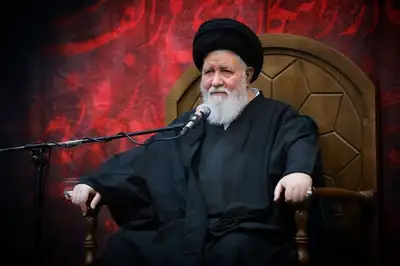

Former Reformist President Mohammad Khatami's remarks on his refusal to vote in Iran's recent elections have sparked significant controversy among political circles.
For the first time in his political career, Khatami not only refrained from voting in the parliament and Assembly of Experts elections, despite Supreme Leader Ali Khamenei's repeated declarations that voting is a religious duty, but also defended his decision as a stance in solidarity with the majority of Iranians discontent with the country's governance, in a speech to his advisors on Wednesday.
While many reformists praise him as "a winner" for boycotting Iran's "stage-managed" elections, he faces strong criticism from other political factions and social media users, both within the regime and among dissidents, who accuse him of hypocrisy and opportunism.
In a note on Wednesday, the ultra-hardline Kayhan newspaper, whose chief editor Hossein Shariatmadari is an appointee of Supreme Leader Ali Khamenei, accused him and other abstaining reformists, such as the Etehad-e Mellat (Nation’s Unity) party, of complicity with the “known enemies of the regime”.
“Refusing to participate in the elections is the officially announced instruction of America and Israel. Is it not? So why are you selling your open complicity and collaboration with America and Israel as moving together with the people?” Kayhan wrote.
Khatami's election abstention, however, appears to have reinvigorated reformists who view his action as a significant step forward with the potential to reconcile with Iranians who have been disillusioned with reformists over the past decade.

Protesters in the past few years often chanted not only against hardliners but also against reformists who they saw as part of the system.
Khatami stated that he abstained from voting in solidarity with the many dissatisfied people who believe that "correcting/reforming" the current trajectory of affairs is the only way to salvage the country.
To him, not voting in the current adverse circumstances is another form of voting, and he hopes that his abstention can help restore people's "damaged trust" in the government and political currents, including reformists.
He argued that the country's urgent need is to restore social capital and "settle differences" between the government and people to "save the country from threats and crises," emphasizing that the ruling system has a greater responsibility in reforming its structure, approach, and behavior.
Khatami has faced criticism for his "historical delay" in refusing to participate in the elections managed by Khamenei and his appointees in the Guardian Council, as well as for not officially articulating his departure from "political Islam."
The political act of abstention by Khatami and his supporters can only be taken seriously when they officially denounce political Islam in every shape and form and admit that all people are equal irrespective of their backgrounds, thinking, and lifestyle, one of his critics argued in an article by Ehsan Rastgar published by Zeitoon news website Wednesday.
“As long as it is devoted to political Islam, this school of thought [to which Khatami and his supporters belong] is not different in essence and its overall approach from Shia fundamentalism and people like the leader of the Islamic Republic,” he wrote.
Once an advocate of “religious democracy,” Khatami referred to “developmental democracy” as the ideal form of governance in his speech and seemed to be endorsing secularism in governance.
The use of the term “developmental democracy” has baffled many who expected him to offer a more straightforward and clear definition of the form of governance he is proposing.
“Developmental democracy” is a notion proposed by Richard L. Sklar, a professor emeritus of political science at the University of California in a book of the same name in which he said developmental democracy is the best form of democracy for African countries.
According to his own website, Sklar’s developmental democracy posits a causal relationship between democratic practice and economic development.
This form of democracy has also been interpreted as one that gives priority to cultivating the development of individual abilities and holds that the estimation of democracy lies in its commitment to national and individual improvement.

Mohammad Ali Jafari, the former commander of the Revolutionary Guards, has stated that the Islamic Republic is committed to addressing what he terms the "hijab removal sedition."
Jafari's remarks come amidst the deployment of government-affiliated forces, known as 'hijab enforcers,' in the Tehran metro since August, intensifying their activities and facing harsh confrontations with women and girls in recent months.
Jafari, also known as Aziz or Ali Jafari, who currently commands the Basij-e Mostaz'afin Brigade of the Revolutionary Guards, made the statement on Friday, emphasizing that "The activities of the promoters of virtue will persist in the Tehran metro, and we are determined to counter the hijab removal sedition through expanding our efforts."
He urged the expansion of enforcers actions, highlighting cooperation with the Tehran Municipality and the Tehran Metro to extend their police action to other metro stations. Drawing a parallel with election campaigns, he urged individuals to encourage their neighbors to promote virtue.
"I regret not being able to accompany you on the field due to physical limitations. The removal of hijab is a major cultural problem for us that can strike at the root of the revolution," he added.
Following the death of Mahsa Amini in custody, which triggered nationwide protests, the Iranian regime has escalated its crackdown on women defying mandatory hijab regulations, despite international condemnation. Amini was arrested in September 2022 on charges of ‘improper hijab’ and died three days later in the hospital.
Amini's death sparked widespread protests across Iran and catalyzed the Woman, Life, Freedom movement. On October 1, Armita Geravand, a teenage student in Tehran, was assaulted by hijab enforcers in the metro, resulting in a coma. She passed away after 28 days in the hospital.

Iranian game developers caution about the dire state of the country's gaming sector following statements by the culture minister on drafting a document for computer games.
Industry activists have identified government blocking of Google Play as the primary obstacle hindering the growth of the gaming industry. According to Donya-e-Eqtesad newspaper in Tehran, Iranian game developers say that the government's directive to filter Google Play has resulted in a significant loss of 30 to 40 percent in revenue for companies in this sector.
Mohammad Mehdi Esmaeili, the Minister of Culture recently announced President Ebrahim Raisi's directive to draft a comprehensive document on computer games. However, industry activists have criticized the drafting of new laws for the sector as futile.
Ali Nadalizadeh, a publisher of mobile games in Iran, has emphasized the removal of the Google Play filter as the most pressing concern in the sector. He argues that “since the gaming sector in the country has been legislatively addressed before, there is no need for new laws.”
Experts caution that the blocking of Google Play has severely impeded game producers' advertising capacity, with domestic alternatives unable to compensate for the loss. In January 2023, the Computer Guild Organization of Iran warned the Minister of Communications about the adverse effects of Google Play filtering, citing a decline in users, reduced developer income, and widespread unemployment among specialized personnel.
The Iranian government's broader internet restrictions, implemented following nationwide protests after the killing of Mahsa Amini in police custody in 2022, initially led to the temporary filtering of Google Play. However, the permanent removal of the government app Rubika from the platform prompted authorities to maintain the filter.
Despite ongoing concerns raised by industry stakeholders, the government has yet to provide a clear rationale for the continued blocking of Google Play.

Iran’s Foreign Minister Hossein Amir-Abdollahian lambasted Meta’s decision to remove Supreme Leader Ali Khamenei’s accounts from Instagram and Facebook.
"Blocking the media accounts of the supreme leader of the revolution is not only a violation of freedom of speech but also an insult to millions of followers of his views," he told Middle East Eye news website on Friday.
Hailing Khamenei as “the most prominent supporter of the oppressed people of Palestine and Gaza,” Iran’s top diplomat attributed Meta’s suspension of the Supreme Leader’s pages in February to a larger campaign allegedly aimed at oppressing pro-Palestinian voices on social media.
The criticism contradicts Iran's own extensive censorship of the internet and social media for more than two decades. Most najor social media platforms and tens of thousands of websites are blocked in Iran.
Amir-Abdollahian denounced the West’s motto of freedom of expression as “hollow and showy,” further adding that it serves as a cover for what he called the West’s “illegitimate political goals.”
The Iranian regime has been a staunch supporter of Palestinian militant groups, including Hamas which invaded Israel on October 7 in what was the most deadly single day for Jews since the Holocaust. The attack killed 1,200 mostly civilians and saw 240 taken hostage to Gaza.
Both Iranian dissidents and pro-Israeli activists have for long urged social media companies to shut down Khamenei’s accounts over restricting access to the Interment inside Iran and also his anti-Semitic remarks and policies.
Welcoming Meta’s move, many Iranian social media users urged Elon Musk to follow suit and deactivate Khamenei’s accounts on X.
In January, Samara Azzi, a Lebanese commentator, warned of coordinated operations of an Iran-backed “cyber army” to silence anti-Hamas and anti-Hezbollah voices on X.
The pro-Iranian cyber army is “gaming the platform’s limited moderation controls in English and especially Arabic to suppress criticism and amplify their own narrative,” she said.

Signs of disobedience among Iranian hardliners towards Supreme Leader Ali Khamenei have emerged shortly after an election that brought numerous new figures to the political forefront.
This can also signal Khamenei's weakness in controlling the ultraconservatives he helped bring to power in an election on March 1 with the lowest turnout in the Islamic Republic's history.
The latest indications of disobedience emerged within hours of Khamenei's advice and orders to hardliners to avoid disgraceful confrontations with each other.
Hamid Rasaei, a former hardliner lawmaker with a questionable reputation, who was disqualified to run in the 2020 parliamentary election, got the go ahead to run this year and won a seat at the parliament (Majles). Within a few days of his election, Rasaei attacked the incumbent Majles Speaker Mohammad Bagher Ghalibaf and his predecessor Gholam-Ali Haddad Adel and called for Ghalibaf's removal from his post.

Both the incumbent and former speakers happen to be relatives of Khamenei. Iranian pundits predicted that granting too much leverage to the ultraconservatives would one day lead them to turn against the leader. It took only a few days for this prediction to come true.
Rasaei wrote in a tweet Friday evening that IRGC-linked Fars News Agency has called for rejecting his credentials as a member of parliament. Rasaei added defiantly that the IRGC agency's threat does not scare him.
As if that was not enough to signal the disobedience that was swiftly responded to by an IRGC media outlet, hours after Khamenei's speech on Thursday, Rasaei repeated his accusations against Ghalibaf once on X (previously known as Twitter) and again on live state television.
Rasaei tweeted that Ghalibaf should be removed from his post as Majles Speaker because he has won only around 400,000 votes in the election while he had won more than 1,200,000 votes in 2020. The decline in Ghalibaf's popularity meant that a major change should occur in the leadership of the parliament.
On prime-time Thursday evening, Rasaei repeated that in a live program on the state television and charged that Tasnim News Agency and Javan Newspaper, two of the media outlets of Iran's revolutionary Guards (IRGC), which he said support Ghalibaf, have attacked him subsequently.
Rasaei also claimed that Khamenei's advice to newly elected lawmakers to avoid conflicts and controversies did not address him. This comes while Tasnim News Agency made it clear on its official X account that Rasaei's statements on state TV were clearly in contravention of Khamenei's remarks.
However, the state TV's deputy chief for political affairs, Alireza Khodabakhshi, was fired the day after, possibly for allowing Rasaei to utter his provocative remarks on air. Khodabakhshi is a an ultraconservative Paydari figure.
In another sign of disobedience to Khamenei, Hassan Bayadi, one of the founders of Abadgaran, a political organization that gave rise to Paydari Party and supported former President Mahmoud Ahmadinejad and is currently a staunch supporter of the Raisi administration, accused the older generation of lawmakers of not knowing what to say and what not to say.

The Iranian Labor News Agency (ILNA) quoted Bayadi as using an expression Haddad Adel had used to describe the new ultraconservatives and older politicians. Haddad Adel had likened older conservatives such as Ghalibaf to big trees and the new ultraconservatives as tiny plants. Bayadi said in the interview with ILNA: "May God help us! The totalitarian big trees at the Parliament do not know what to say and what not to say."
Bayadi, who has been so far close to Khamenei's office, also made unforgivable mistakes in that statement: First he attacked Khamenei's relatives, and second, he did not abide by Khamenei's advice to avoid controversies and conflicts among insiders.
The occurrence of two such cases in one day, make it difficult for Khamenei to re-establish his authority in the eyes of his devoted followers who used to see him as an infallible God-like father figure. Almost everyone has seen the signs of aging and illness in Khamenei's face and posture, despite his attempt to walk without a walking stick to prove his fitness.
As conservative activist and analyst Abdolrahim Ansari pointed out, Khamenei did not ask ordinary social media activists to avoid infighting and controversy. He was addressed candidates who have been elected with his blessing without the right qualifications in an engineered election.