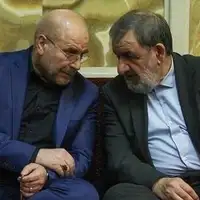
Former Iranian Culture Minister Blames Government For ‘Hungry Masses’

Reza Salehi Amiri, Iran's former Minister of Culture, blamed the government for the country's poverty crisis in a recent address.
Reza Salehi Amiri, Iran's former Minister of Culture, blamed the government for the country's poverty crisis in a recent address.
Speaking at the 17th Annual Conference of the Iranian Political Science Association he said that, "We are facing a phenomenon called the increasing spread of hungry (poor) masses. You cannot tell a society where six deciles of it go to bed hungry that our governance is satisfactory."
He warned of the corrosive effects of despair and hopelessness which has broken down the country's social cohesion and caused a deepening of societal divisions.
He said the country's cultural institutions lack leadership which addresses the massive social change underway since the 2022 Women, Life, Freedom protests. "Iranian society is undergoing significant change, adhering to its previous policy decision-making system," he said. "A critical issue facing Iranian society is the absence of a desirable governance model, resulting in a cycle of flawed governance."
He stressed that elections within the flawed governance structure failed to bring about transformative change, just days after the March 1 elections which saw record low turnouts across the country.
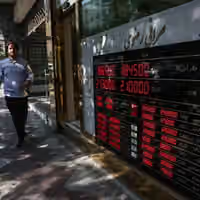
Recent reports received by Iran International suggest a significant decline in purchasing power and the exclusion of essential food items from households' consumption baskets two weeks ahead of the Norouz (Nowruz) Iranian New Year. Items such as red meat, chicken, fish, rice, and dairy products are notably absent due to the currency's devaluation, exacerbating inflationary pressures.
The Iranian rial has depreciated by 20 percent since early January, contributing to soaring prices of imported staples like wheat, rice, and animal feed. Annual inflation has surged above 40 percent since 2019, precipitating a decline in real incomes and plunging millions into poverty amid restrictive economic policies and international sanctions.