Military Claims Iran Has No Restriction For Global Arms Deals

Amid Western objections over Iran’s arms supplies to Russia, Tehran’s defense minister claims the regime “has no restriction” on exporting and importing weapons.
Amid Western objections over Iran’s arms supplies to Russia, Tehran’s defense minister claims the regime “has no restriction” on exporting and importing weapons.
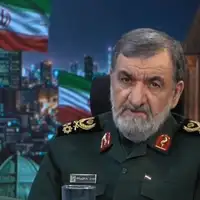
Brigadier General Mohammad-Reza Ashtiani made the remarks in an interview with Revolutionary Guards-affiliated Tasnim news agency on Sunday, not explaining how this is translated into reality under the US and EU arms embargoes on the country.
“We have no restriction on supplying equipment to [other] countries. We are in contact with all states and keep this contact with our might,” he said and asserted that there is no ban on Iran for buying defense equipment.
However, due to concerns over Iran's nuclear program, in addition to earlier US measures, the EU imposed a full arms embargo on Iran in 2007, which remains in place even after the UN Security Council-imposed restrictions on arms exports to Iran were lifted in October 2020.
The EU sanctions included a prohibition on the direct or indirect supply, sale or transfer of items, materials, equipment, goods and technology, ammunition, military vehicles, paramilitary equipment, and spare parts of all types. Its scope differs from the UN arms embargo in that it includes all types of arms and not only those defined by the UN Register of Conventional Arms.
As part of an international agreement on the Iranian nuclear program, the Joint Comprehensive Plan of Action (JCPOA) of 14 July 2015, the EU agreed to lift its missile technology and arms transfers embargo on Iran eight years after the International Atomic Energy Agency (IAEA) would provide a report to the UNSC to conform that Iran has taken the actions related to its nuclear program specified in the JCPOA.
Therefore, the EU embargoes are scheduled to remain in place until 18 October 2023, and will also be lifted if and when the IAEA reaches the so-called 'Broader Conclusion' in which it determines that all nuclear material in Iran remains in peaceful activities. Such a confirmation has not happened yet, and its prospects seem very dim, considering the fact that Iran is enriching uranium above the levels specified in the JCPOA and has been advancing its ballistic arsenal disregarding its commitments.
On Thursday, Iran unveiled its newest long-range ballistic missile, prompting France and the US to condemn the move as a violation of the United Nations Security Council resolution 2231 of 2015 that endorsed the Iran nuclear deal.
However, it seems that the Islamic Republic feels confident about counting on its allies for arms exports and imports, such as Russia and Venezuela.
Elsewhere in the Sunday interview, Defense Minister Ashtiani said, “The Islamic Republic will help any country that remains committed to international security and peace,” without elaborating how Russia is committed to international peace given its war in Ukraine.
Referring to reports about Iran’s plans to buy Sukhoi Su-35 Russian-made single-seat, twin-engine fighter jets, he said that “if we feel the need…we try to get technological facilities or equipment from any country that possesses them.”
Despite reports indicating a possible shipment of Sukhoi Su-35s in the near future, Ashtiani said “The discussions about the Su-35 fighters are mostly speculations,” adding that some deals may yield a result years after their signing.
Last September, Commander of the Iranian Army’s Air Force Brigadier General Hamid Vahedi said Iran has no plans to buy Sukhoi 30, but it has rather put on its agenda the purchase of Su-35 fighters. In January, Iranian lawmaker Shahriar Heidari said that the Su-35 jets were to arrive in the current Iranian calendar year, which began on March 21.
Ashtiani also referred to a 20-year partnership agreement signed between the Islamic Republic and Venezuela last June to expand ties in various sectors, including military. He said that the defense ministry is coordinating in different fields, among them security and defense.