Rial sinks on Tehran free market amid revived UN sanctions
Iran’s rial weakened further on Tehran’s free market on Tuesday, days after the reimposition of UN snapback sanctions, trading at 1,133,000 per dollar, 1,330,300 per euro and 1,522,900 per pound, according to local exchange rates.
An Iranian lawmaker said on Tuesday that the price of resisting Western pressure was “far less” than compromise, as Tehran faces renewed sanctions under the snapback mechanism.
Mohammad Sadat Ebrahimi, who represents Shushtar and Gotvand, told parliament that Iran “will never bow to aggressors” and that yielding would legitimize Israel and undermine national sovereignty, state media reported.
He praised President Masoud Pezeshkian’s stance at the United Nations and said Iran, unlike Afghanistan or Libya, would not surrender to US demands.
He added that with unity and support from neighboring states, the impact of sanctions could be neutralized within months.
An Iranian lawmaker said Tehran’s cooperation with the UN nuclear watchdog had fallen to zero and accused Western powers of seeking to curb the country’s defenses.
Mahmoud Nabavian, deputy head of parliament’s national security and foreign policy committee, added that International Atomic Energy Agency inspectors were no longer in Iran.
He said Tehran had already made extensive concessions during talks in the early 2000s, including halting enrichment and allowing visits to military sites.
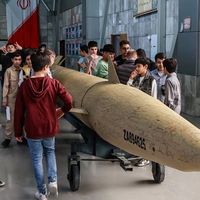
Nabavian also said the United States and European powers wanted Iran’s missile range cut to 300 km, a demand he rejected as undermining national defense.
Iran’s armed forces chief of staff said the country’s naval units were at an “extraordinary level of readiness” for any potential future conflict, state media reported on Tuesday.
Major General Abdolrahim Mousavi, inspecting army and Revolutionary Guard naval forces in Hormozgan province, said “very significant steps” had been taken in the short period since the recent 12-day war.
An Iranian lawmaker said on Tuesday that the reimposition of UN sanctions under the snapback mechanism has pushed consumer prices up by as much as 30% but argued that the impact could be contained through effective management.
Alireza Nesari, a member of parliament’s construction committee, said that while the sanctions’ economic effects were “clear and visible,” Iran was familiar with such measures and had “good practice” in coping with them.
“The art of officials is to preserve internal unity and make conditions bearable for people,” he said, urging the government to secure basic goods, control currency and gold prices, and support households with food, housing, jobs and family incentives.
Nesari warned that failure to control inflation could trigger social unrest, and called on supervisory and security bodies to curb profiteering.
“If the government does not manage economic and livelihood conditions, people will certainly protest,” he said.
Alireza Nesari, a member of the Iranian parliament’s construction committee
Iranian President Masoud Pezeshkian said on Tuesday that Tehran would not yield to foreign pressure despite sanctions and economic difficulties, pledging to “stand for Iran until the last breath.”
“Now the world is pressuring us to surrender, but surrender is not in our nature,” Pezeshkian told a ceremony honoring Iran’s freestyle and Greco-Roman wrestling champions. “Although we are in difficult conditions, we are taking steps such as improving relations with our neighbors.”
He said Iranian athletes’ victories at the world championships in Croatia had lifted national morale and should inspire broader determination. “With the determination and passion you showed, we must move forward toward success in all areas,” he added.