Russia’s President Vladimir Putin was seen talking with Iran’s nuclear chief Mohammad Eslami and IAEA chief Rafael Grossi on the sidelines of the international forum World Atomic Week in Moscow on Thursday.
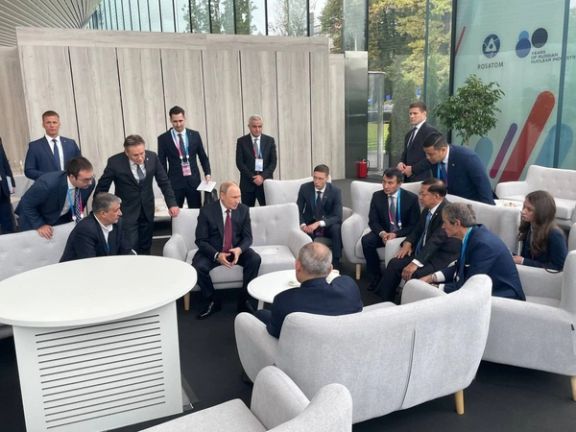
Russia’s President Vladimir Putin was seen talking with Iran’s nuclear chief Mohammad Eslami and IAEA chief Rafael Grossi on the sidelines of the international forum World Atomic Week in Moscow on Thursday.
Asked if looming international sanctions on Iran triggered by European states would prevent the rebuilding of its nuclear program, former Mossad chief Yossi Cohen told the BBC that Tehran responds only to attacks.
"I hope. I know that the only thing that speaks to the Iranian is kind of an attack. I don't think that they have ever reversed their agenda because of sanctions," he said.
US and Israel attacks on Iranian nuclear sites in June set the program back and Tehran no longer has the ability to enrich uranium, added Cohen, who ran the Israeli spy agency from 2016 to 2021.
"I think it is significantly destroyed. It would be very hard to rebuild. It would take them, I believe, in between, lots of months and maybe some years to rebuild what they've done. And there is not something much more significant to my understanding. Now, Iran cannot enrich."


“Martyrdom is the reward of jihad, whether in the eight-year defense, in the heroic 12-day war, or in Lebanon and Gaza and Palestine,” Khamenei said in a message read at Tehran’s Behesht Zahra cemetery, where ceremonies for “Week of Sacred Defense” were held.
He added: “Nations grow with these struggles and shine with these martyrdoms.”
Khamenei said this year’s commemoration “has acquired another dimension with the martyrdom of a number of prominent figures of the resistance path and brave young people in various places.”
He called on Iranians to “believe in God’s promise of the triumph of truth and the downfall of falsehood and remain committed to our duty in supporting God’s religion.”
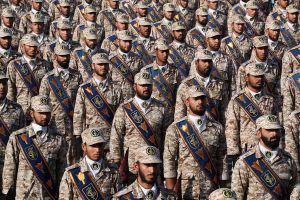
Earlier this week, Iran announced rare changes to its annual military parades, calling off at least two events over what it called security concerns and the need to prioritize military readiness.
The parades, traditionally held during Defense Week beginning on September 22, came this year in the aftermath of 12-day war with Israel in June that dealt the Islamic Republic one of its biggest ever military blows.