German Foreign Minister Johann Wadephul said on Tuesday the chances of reaching a diplomatic solution with Iran were “extraordinarily slim,” as the three European powers prepared for another meeting with Iranian officials to press Tehran over its nuclear program.
The meeting with Iran’s foreign minister on Tuesday in New York aimed “to explore the last possibilities,” he added.
Iranian and European ministers will meet in New York on Tuesday at 10:00 a.m. local time (1400 GMT) for talks on Tehran’s nuclear program on the sidelines of the United Nations General Assembly’s high-level week, AFP reported, citing an unnamed French diplomatic source.
Iran’s Supreme National Security Council secretary Ali Larijani said on Tuesday that Iran was willing to accept a reasonable and fair proposal if it safeguarded the country’s interests, rejecting claims that Tehran was avoiding negotiations.
“It is a lie that Iran does not negotiate. We were negotiating when you launched a military attack on us. If a reasonable and fair proposal is made that preserves Iran’s interests, we will accept it,” Larijani said in a post on X.
An Iranian lawmaker warned that the country has reached a critical juncture between advancing its nuclear program or risking war, urging officials to forge a new version of the 2015 nuclear deal to end economic and political uncertainty.
Mostafa Pourdehghan, a member of parliament’s Industries and Mines Committee, said activation of the United Nations “snapback” sanctions mechanism had already cast a psychological shadow over Iran’s fragile economy.
“Whether or not the mechanism is enforced next week, both possibilities carry negative effects for markets,” he said, adding that “if the atmosphere of uncertainty continues, the country faces an even bleaker economic outlook.”
The lawmaker criticized past leaders for downplaying sanctions as “scraps of paper,” arguing that such populist positions left Iran isolated. “We have now reached the crossroads of nuclear and war,” he said. “We must either end this ambiguity or resolve fundamental issues with the international community while preserving national rights.”
Pourdehghan said Iran’s 2015 agreement with world powers created an opportunity, but internal divisions undermined its benefits and ultimately gave Washington space to exit the accord in 2018. He argued that only a new arrangement -- “a JCPOA 2 with updated structures and timelines” -- could help Tehran navigate sanctions and avert deeper crisis.

Iran’s central bank governor Mohammadreza Farzin sought to reassure business leaders on Tuesday that the country’s foreign exchange and gold reserves remain secure as UN snapback sanctions loom later this month.
Speaking at a meeting with the National Entrepreneurs Assembly, Farzin said the Central Bank of Iran (CBI) has “full security and access” to reserves held abroad and is preparing special measures to support exporters, ease access to hard currency and expand financing channels.
He announced plans for up to €200 million in sukuk Islamic bonds, new credit for export-oriented firms and a joint committee with entrepreneurs to resolve banking hurdles.
Farzin stressed that the CBI’s priority is to curb inflation and maintain financial stability, pledging that “all monetary and foreign exchange decisions will be taken with these objectives in mind.”
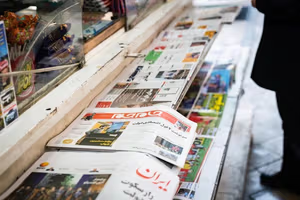
He also said the bank has introduced new instruments such as chain financing, gold-backed bonds and pre-sale of foreign currency to increase resilience in the market.
The remarks come as Iran braces for the automatic return of UN sanctions on September 28 after Britain, France and Germany triggered the mechanism last month.
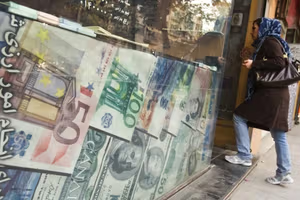
The snapback would reinstate international restrictions suspended under the 2015 nuclear deal, compounding existing US and EU sanctions that have already slashed oil revenues and battered the rial.
Iran’s currency has tumbled past 1,038,000 rials per dollar on the open market, while inflation hovers near 50%.
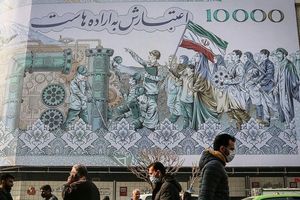

Analysts warn that renewed sanctions could push inflation above 60–90% and deepen negative growth.
Despite official assurances, businesses say access to foreign exchange remains a critical obstacle, with many entrepreneurs urging structural reforms and clear rules for investors.
The central bank’s confidence message contrasts with mounting signs of distress, including protests over living costs, reports of suicides linked to financial hardship and warnings from experts that Iran’s energy and fiscal systems are at breaking point.