More Stories

Speaking at a meeting with the National Entrepreneurs Assembly, Farzin said the Central Bank of Iran (CBI) has “full security and access” to reserves held abroad and is preparing special measures to support exporters, ease access to hard currency and expand financing channels.
He announced plans for up to €200 million in sukuk Islamic bonds, new credit for export-oriented firms and a joint committee with entrepreneurs to resolve banking hurdles.
Farzin stressed that the CBI’s priority is to curb inflation and maintain financial stability, pledging that “all monetary and foreign exchange decisions will be taken with these objectives in mind.”
He also said the bank has introduced new instruments such as chain financing, gold-backed bonds and pre-sale of foreign currency to increase resilience in the market.
The remarks come as Iran braces for the automatic return of UN sanctions on September 28 after Britain, France and Germany triggered the mechanism last month.
The snapback would reinstate international restrictions suspended under the 2015 nuclear deal, compounding existing US and EU sanctions that have already slashed oil revenues and battered the rial.
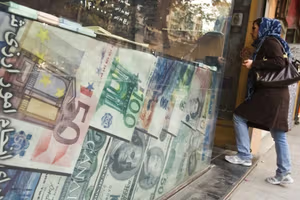
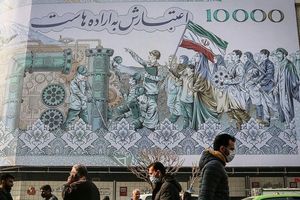
Iran’s currency has tumbled past 1,038,000 rials per dollar on the open market, while inflation hovers near 50%.
'All engines of Iran’s growth have stopped' - Iranian business newspaper

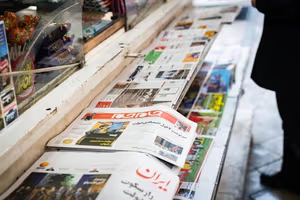
Iranian youth facing chronic anxiety as living costs climb - Tehran daily
Analysts warn that renewed sanctions could push inflation above 60–90% and deepen negative growth.
Despite official assurances, businesses say access to foreign exchange remains a critical obstacle, with many entrepreneurs urging structural reforms and clear rules for investors.
The central bank’s confidence message contrasts with mounting signs of distress, including protests over living costs, reports of suicides linked to financial hardship and warnings from experts that Iran’s energy and fiscal systems are at breaking point.
When Iranian President Masoud Pezeshkian took the podium at the United Nations General Assembly last year, he presented himself as a reformist leader promising “national empathy,” constructive global engagement and an end to conflict through dialogue.
In his 2024 speech, Pezeshkian denounced Israel over its war in Gaza, accused it of genocide, and called for a referendum allowing all Palestinians -- Muslims, Christians and Jews -- to decide their future.
He stressed that Iran had never initiated a war and sought lasting peace and stability in the Middle East, while condemning US sanctions as “inhumane weapons” against the Iranian people.
He also urged full implementation of the 2015 nuclear deal, from which Washington withdrew in 2018, warning that Donald Trump’s so-called maximum pressure only deepened insecurity. “If JCPOA commitments are implemented fully and in good faith, dialogue on other issues can follow,” he told delegates, signaling openness to diplomacy.

A year later, Pezeshkian returns to New York under far darker circumstances.
In June, Israel fought a 12-day war with Iran, ending in US strikes that wrecked several of Tehran’s key nuclear sites. Iran says much of its enriched uranium stockpile now lies buried under rubble.
Months before the Iran-Israel war, the UK Parliament’s House of Commons Library said in a January 2025 report that Tehran’s regional alliances were already weakened. It said Hamas and Hezbollah had lost leaders in Israeli strikes, while Syria’s Assad government collapsed in December, leaving Iran’s network of partners militarily diminished.
Following the conflict, the European parties of the 2015 nuclear deal activated a 30-day “snapback” process at the United Nations, due to reimpose sanctions on September 28, and stoked debate in Tehran over leaving the Nuclear Non-Proliferation Treaty.
While IAEA chief Rafael Grossi says cooperation with inspectors has not been officially suspended, he acknowledged “different voices” in Iran calling for such a step.
The standoff has left diplomacy on a knife edge, with Western envoys pressing Tehran to allow inspections and restore trust as sanctions loom.
As Pezeshkian prepares to deliver his 2025 address on Wednesday, he faces mounting economic strain at home, international isolation and speculation over whether he will soften or harden Iran’s stance in the wake of war.