Iranian Foreign Minister Abbas Araghchi told European Union foreign policy chief Kaya Kallas that continuing negotiations with the United States is unjustifiable as long as Israeli attacks persist.
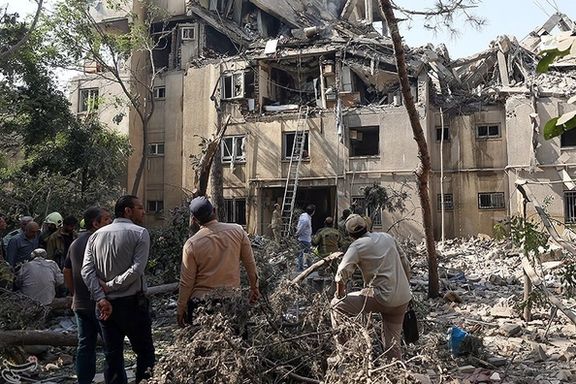
Iranian Foreign Minister Abbas Araghchi told European Union foreign policy chief Kaya Kallas that continuing negotiations with the United States is unjustifiable as long as Israeli attacks persist.
Senior Revolutionary Guard commander Esmail Kowsari said on Saturday that Iran is considering closing the strategic Strait of Hormuz in response to ongoing hostilities and would make “the best and most decisive decision.”
“We have many options to retaliate against the enemy, and military responses are only part of our measures,” said Kowsari, who is also a member of the parliament.
The Strait of Hormuz is a critical global oil transit route.

The Israeli military’s Persian-language social media account posted a list titled “Casualties in the First Strike,” naming Iranian military and government officials, as well as nuclear program personnel, killed in Israeli attacks.

Israel’s recent airstrikes on Iran, which targeted nuclear sites and key military figures, suggest a dual objective: not only delaying Tehran’s nuclear program but also aiming to destabilize the Islamic Republic establishment, a Reuters analysis said.
The attacks struck Iran’s nuclear facilities at Esfahan and Natanz, missile factories, senior military commanders, and nuclear scientists, dealing a blow to both Iran’s military capabilities and its regional prestige.
Reuters interprets the targeting of senior officials as an attempt to undermine the security apparatus supporting Iran’s leadership.
Israeli Prime Minister Benjamin Netanyahu directly addressed the Iranian people, urging them to rise up, echoing past Israeli operations that contributed to political shifts in Lebanon and Syria.
However, experts caution that deep-rooted opposition to Israel within Iran and strong internal security forces make overthrowing the government uncertain. Analysts also say Israel lacks the capability to fully dismantle Iran’s nuclear program alone and may rely on prolonged strikes and potential US cooperation.